
Let me start by stating the obvious-in-retrospect: Late June is not the best time to visit India. More than one person told me this ahead of time, but I sort of shrugged it off. I grew up in Hawaii, and I just spent three months traveling in Southeast Asia ffs. I know hot. And besides, I figured, I didn’t have a lot of choice vis a vis route + timeline.
But India was… a lot. It was very nearly too much. For the first time, I started to really seriously consider cutting my trip short and going home.
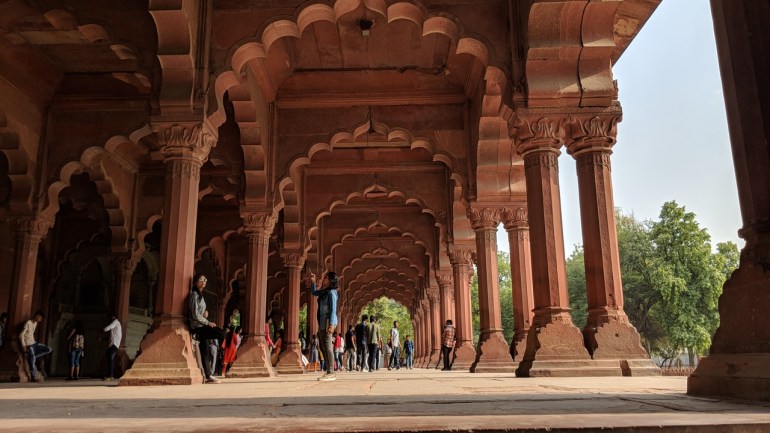
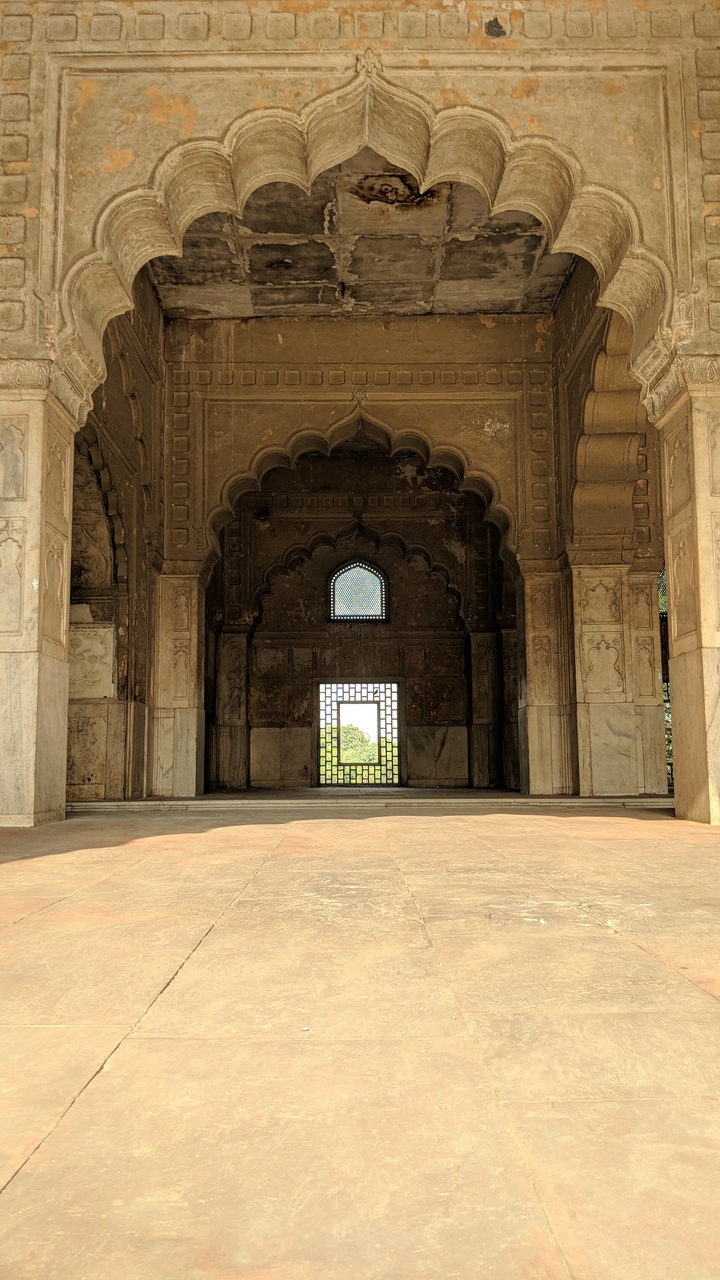
My first day in Delhi it was 108 F, and it didn’t cool down much in the evenings. At night, I would wake with a choked start whenever the AC sputtered out, convinced I might actually die of stifling. Once I’d screwed up my courage to leave the cool little nest of my hotel room — harder than it sounds! — I could still only stand to be out of air conditioning for a couple of hours, allowing for brief skirmishes into my hotel’s surrounding neighborhood and a single sightseeing mission to the Red Fort.
The Paharganj neighborhood is near the train station, adjacent to the old city, and it’s lousy with hotels. But the streets were a fever pitch of chaos, and there was none of the tourist-friendly infrastructure that makes much of Southeast Asia so comfortable and easy. I saw exactly one other obvious foreigner; I suppose most western tourists heed the warnings about summer on the subcontinent.
The poor and working class Indians thronging the streets around me had no such luxury, however. Men hauled lumber on hand-pulled carts through traffic. Children sold goat milk straight from the udder in blazing intersections. Chai-wallahs sweated over massive pans. Rickshaw drivers lounged awkwardly in their vehicles (which often double as homes). This was the kind of heat that can in fact kill you, but that didn’t mean that life had the luxury to pause.
I did not, it turns out, know heat. We do not, collectively, really know heat — not yet. Delhi at the height of summer provides a bit of an early-days preview: India is now two and a half times more likely to experience the kind of deadly heat wave that killed more than 2,500 people in 2015, compared to half a century ago, and every year that factor is increasing.
Rishikesh
I needed to get out of Delhi, so as soon as I could get my bearings and procure a bus ticket, I headed for Rishikesh in the Himalayan foothills, thinking it might be a bit cooler. Catching the bus was my single most frustrating travel experience yet, and included over three hours of trying to find said bus, plus several minutes of crying on the curb. But I made it on a bus, and the next morning I made it to Rishikesh. (Where, I discovered, it was still over 100 F.)
Rishikesh is purportedly the birthplace of yoga, and ever since the Beatles visit in the ‘60s made it famous in the West it’s been something of a magnet for hippies on weird trips. I guess that includes me these days.
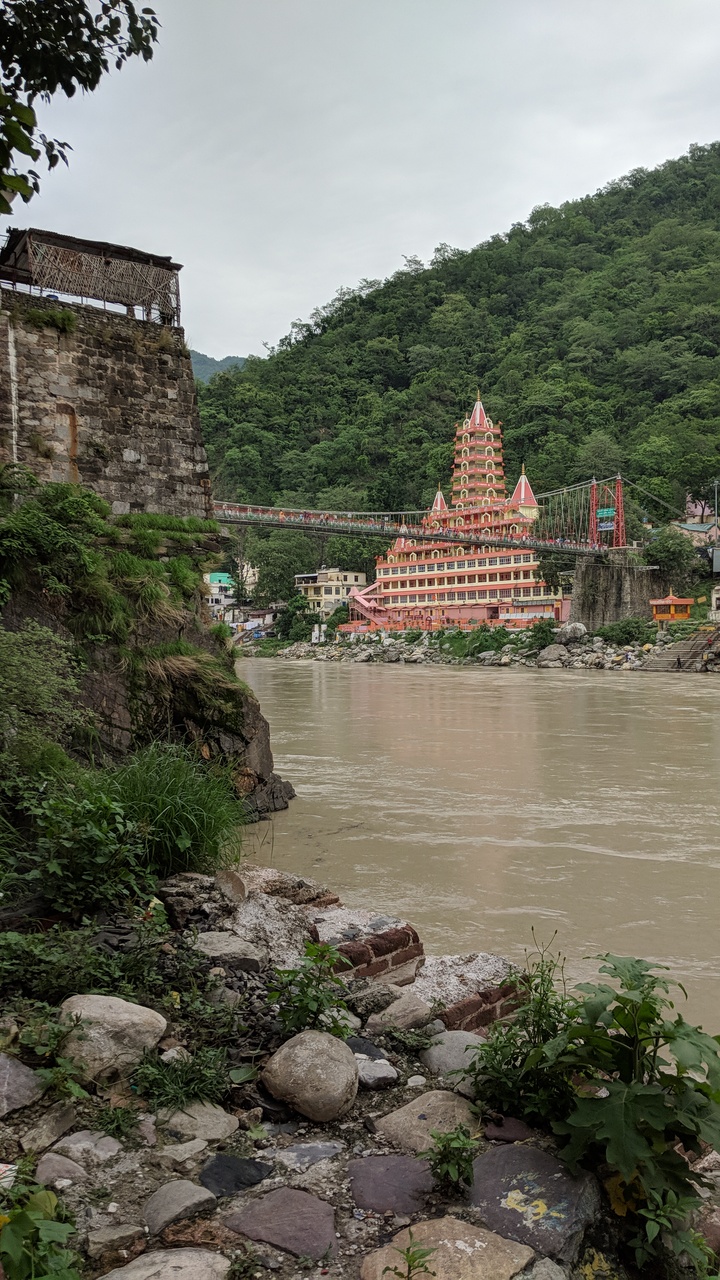
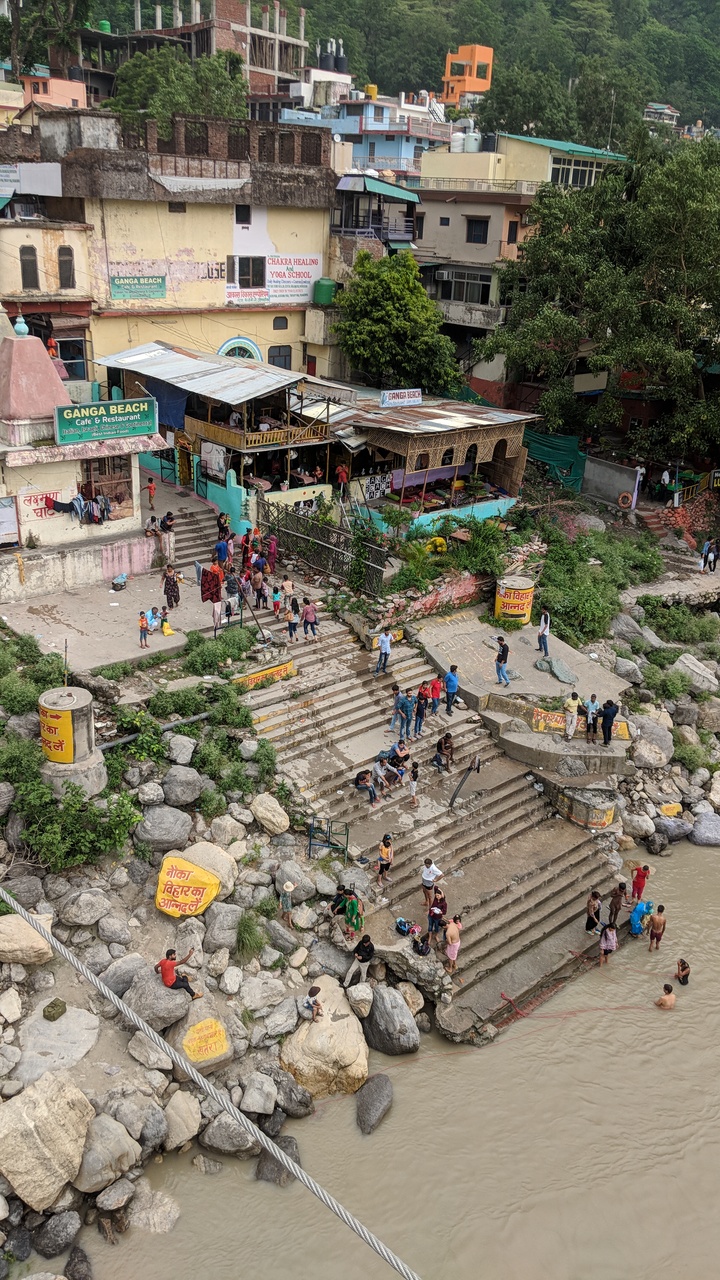
I spent almost two weeks in a yoga ashram in the Tapovan neighborhood, overlooking the great Ganges River. Two yoga sessions and two meditation sessions a day, fire puja in the mornings, vegetarian meals in silence, kirtan devotional singing in the evenings. It was, I suppose, a way of making India feel manageable, less chaotic, safe — and it worked.
I loved the kirtan and the morning fire ceremonies the most — anything that involved chanting, really. I’m not a Hindu, and I don’t believe in the Hindu pantheon. But there’s something about gathering a group of humans about a fire, making ritual offerings to the fire, and raising your voices together that’s powerful. I think the power comes from something in the way humans are put together rather than from any sort of deity, but it’s there nonetheless.
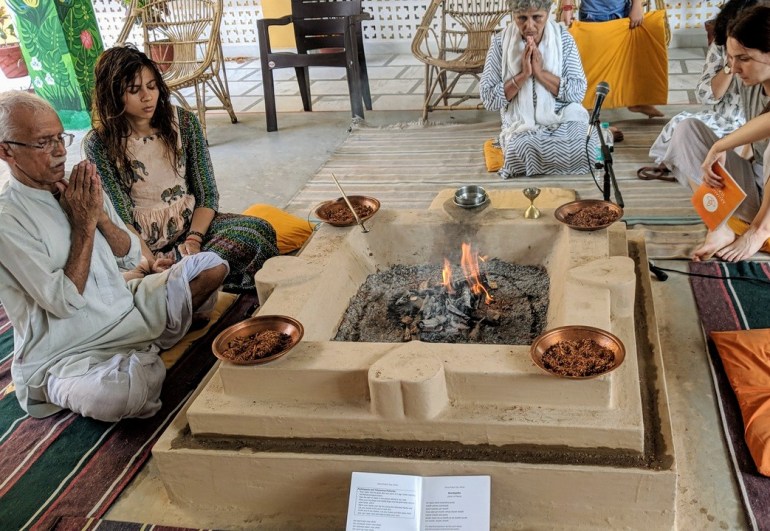
I like ritual, and I think it’s important. I already knew that about myself, but my stay in the ashram was a more visceral, experiential underscoring of that conviction than I’ve previously had. I think there’s power in devotion, even if it’s objectless. I think there’s power in surrender, even if it’s just to sound and a group and a directionless asking — not just wanting, but really asking — for things to be different than they are. I guess I think you can have grace, and even faith, without god.
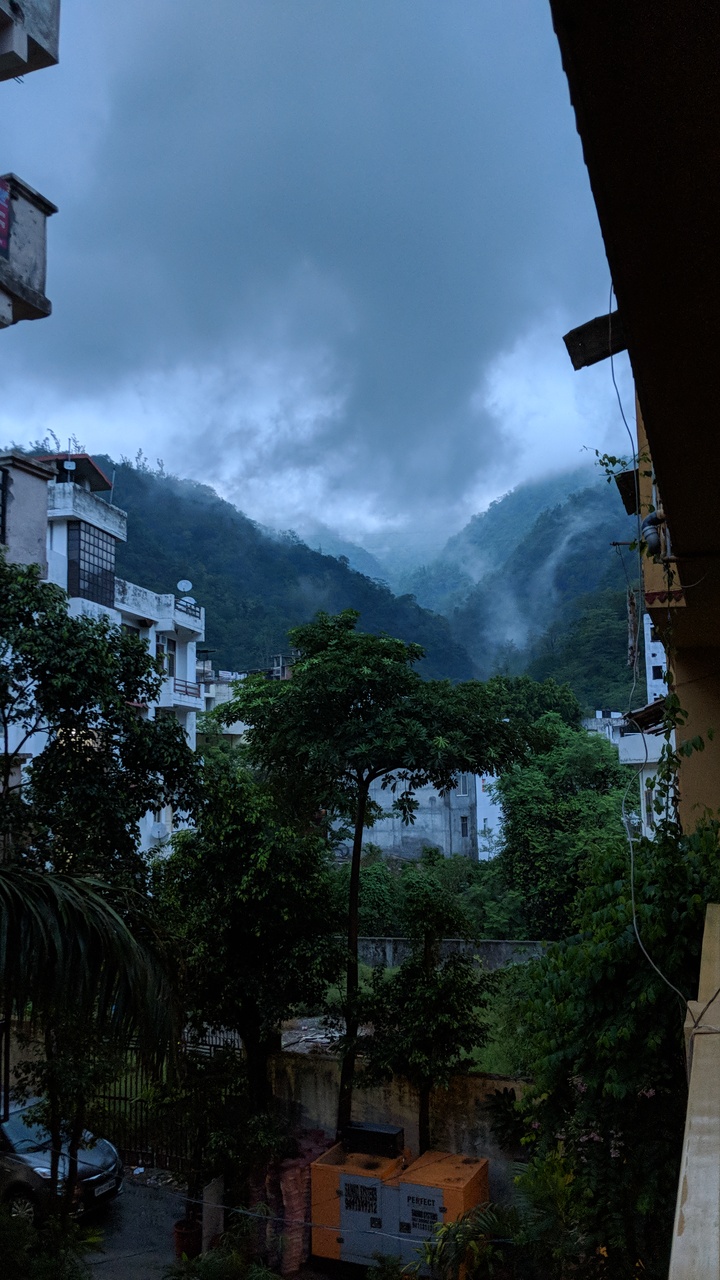
About halfway through my stay in Rishikesh, the monsoon came. The first rains rolled in like a great, sheeting, sopping train. They came during kirtan, and afterward everyone danced in the downpour, the kids sliding about the tiled courtyard and hooting with glee. The dust dropped out of the air and the temperature immediately dropped 15 degrees. It felt a little like grace.
Varanasi
After Rishikesh and another brief stopover in Delhi — complete with a delicious home-cooked meal in the suburbs, courtesy of my friend and ex-coworker Ayesha — I made my way by sleeper train to another holy city on the Ganges: Varanasi.
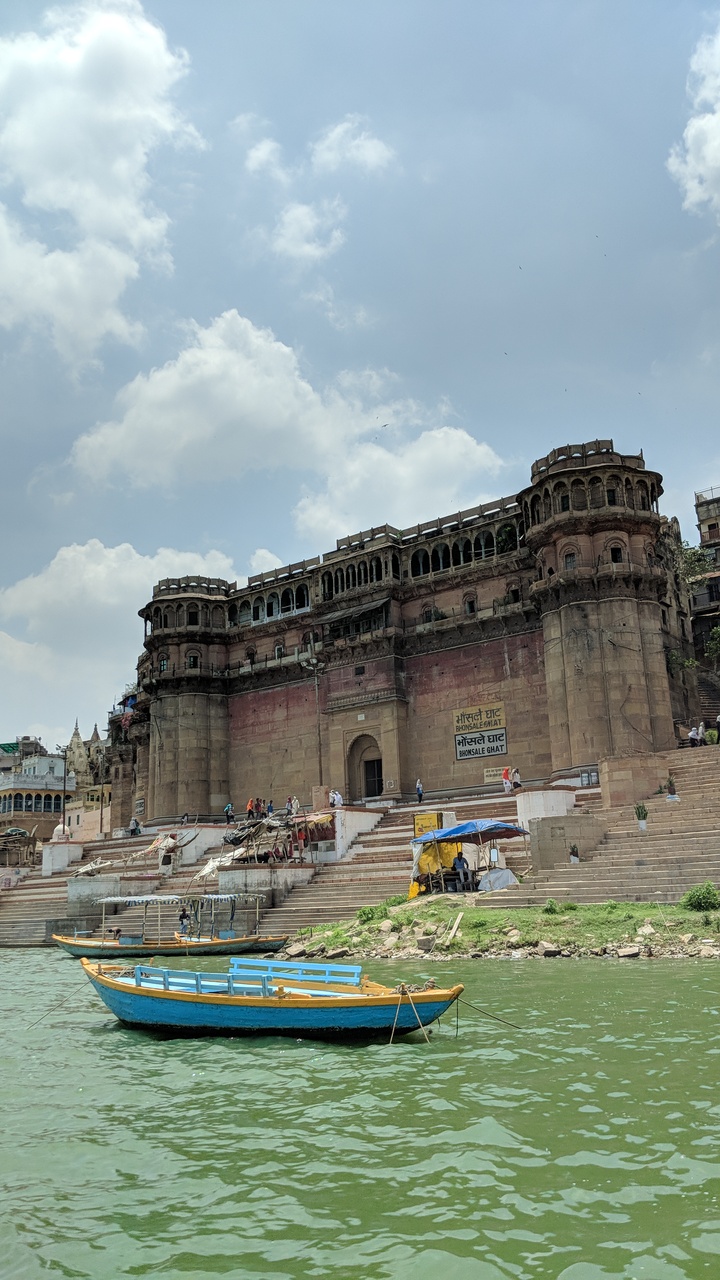
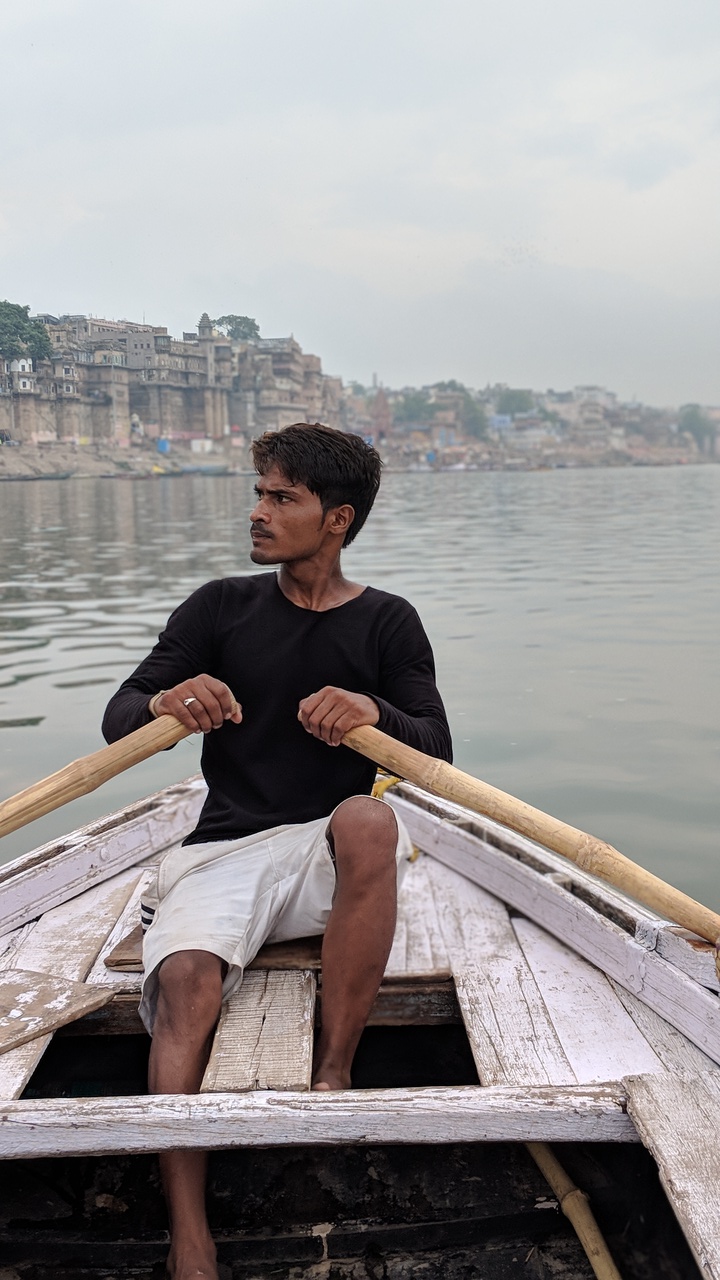
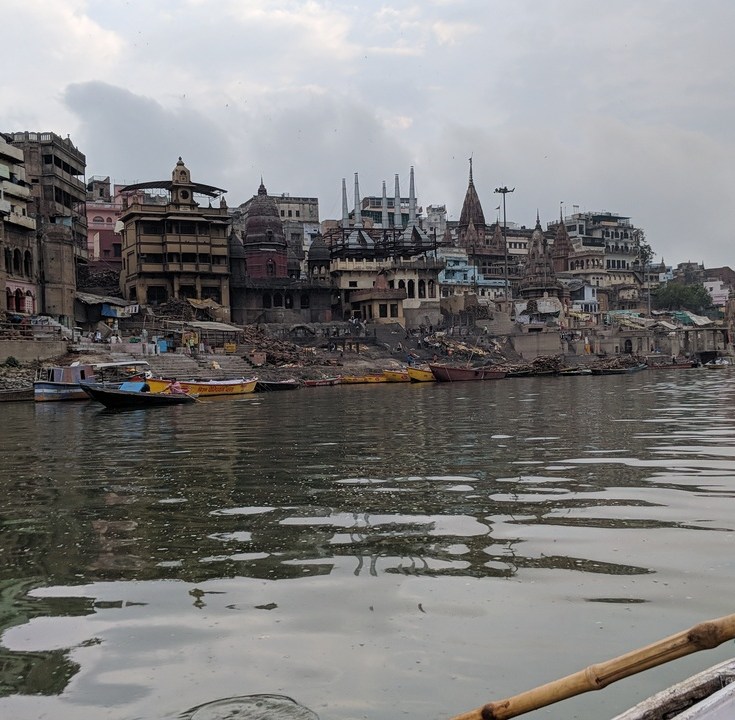
Varanasi was the only place in India I’d absolutely not wanted to miss. I was captivated, in college, by my then-boyfriend’s descriptions of this oldest of cities. One of the longest continually inhabited places on earth, Varanasi — or Benares, or Banaras, or Kashi — is really singular. The place feels wholly ancient in a way that’s rare in bustling, modernized Asia, and medieval in a way that Europe’s neat, carefully-preserved old towns and cities just can’t match.
It’s dirty, for one thing. Like, really dirty. By the time Mama Ganga makes her way down from the foothills and across the plains to Varanasi, the river has become one of the world’s most polluted waterways. You have to watch your step carefully while making your way through the narrow “gallis” or alleyways that warren the river’s west bank (the east bank is a hazy, sandy no-man’s land populated by a few camel and pony ride vendors). The streets are liberally spotted with shit — cow shit, dog shit, monkey shit — and broken paving stones.
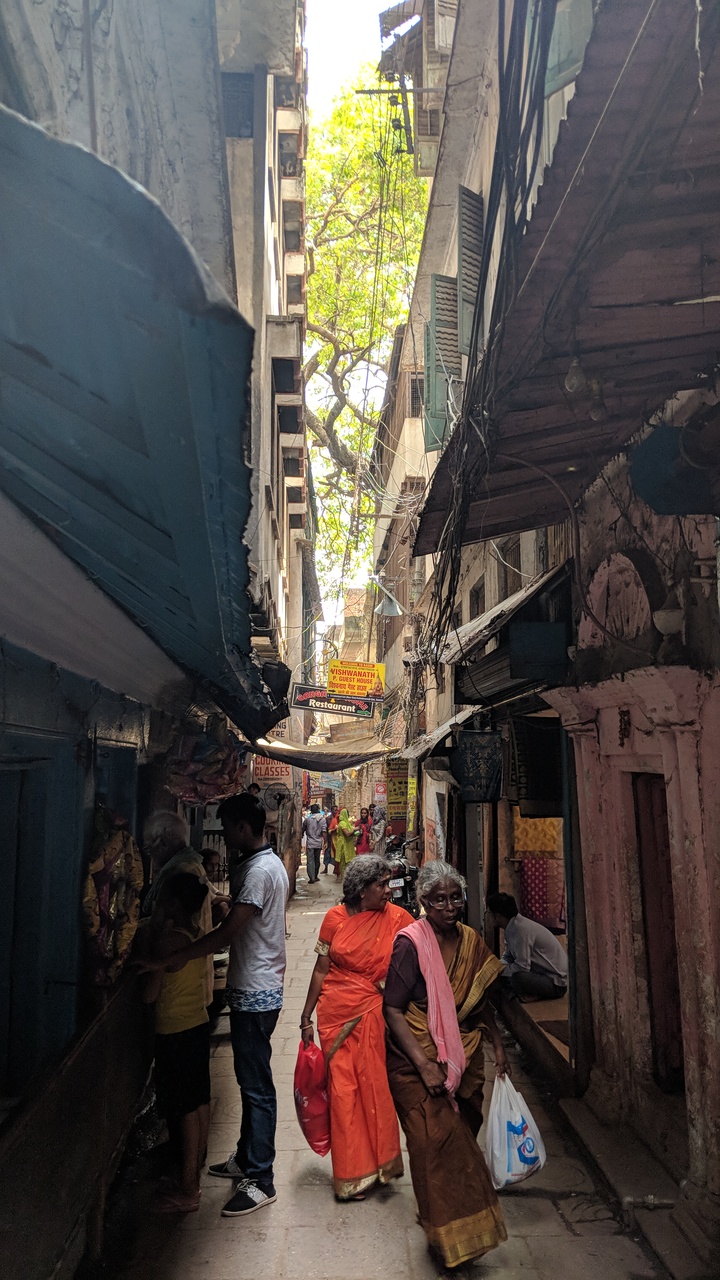
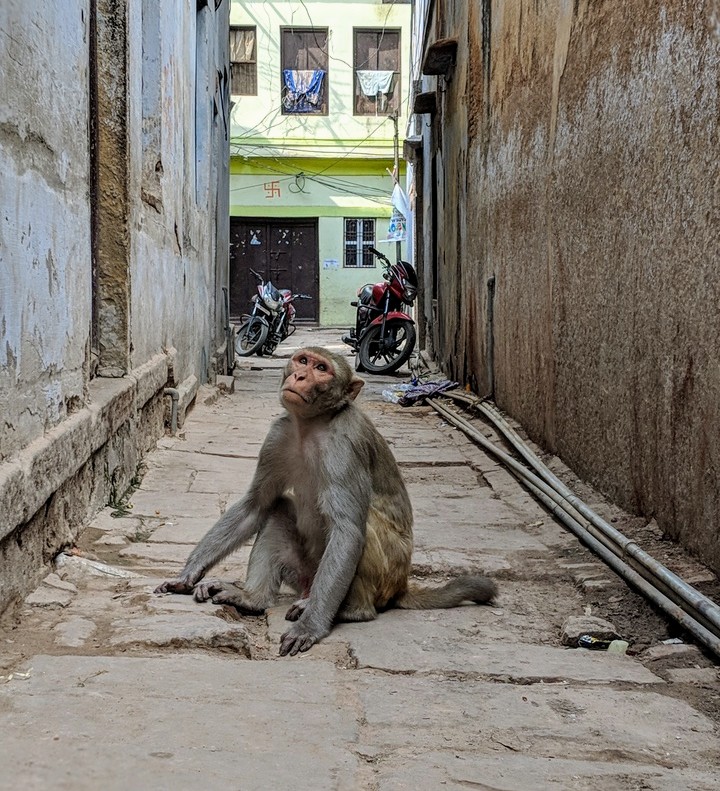
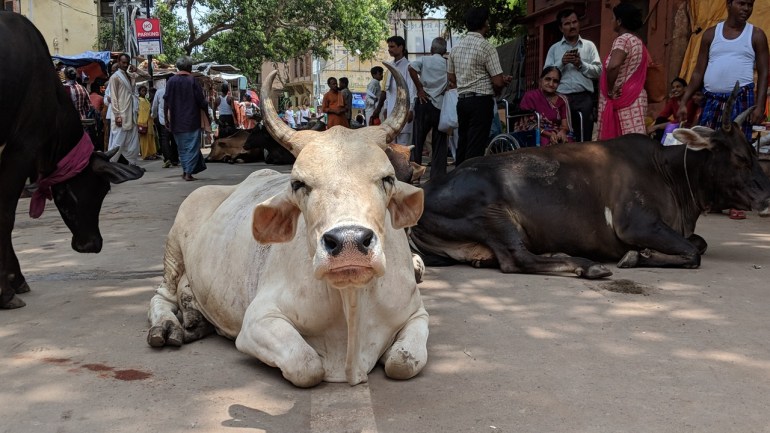
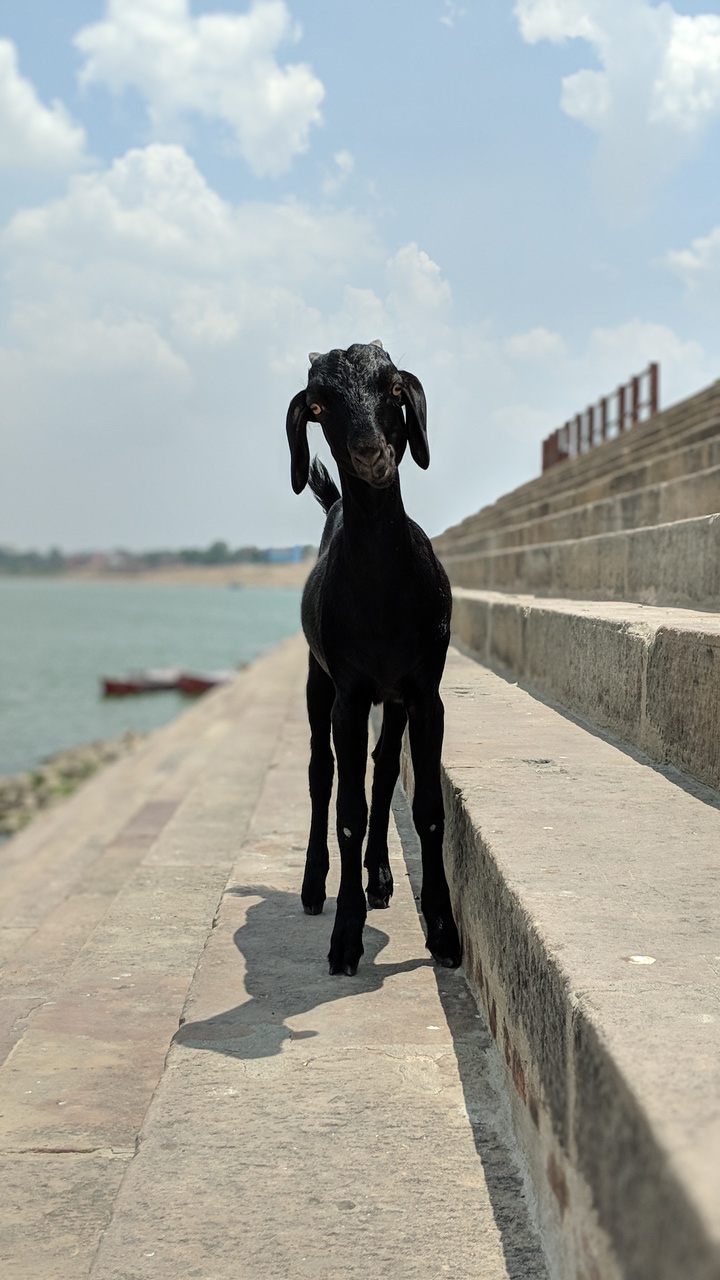
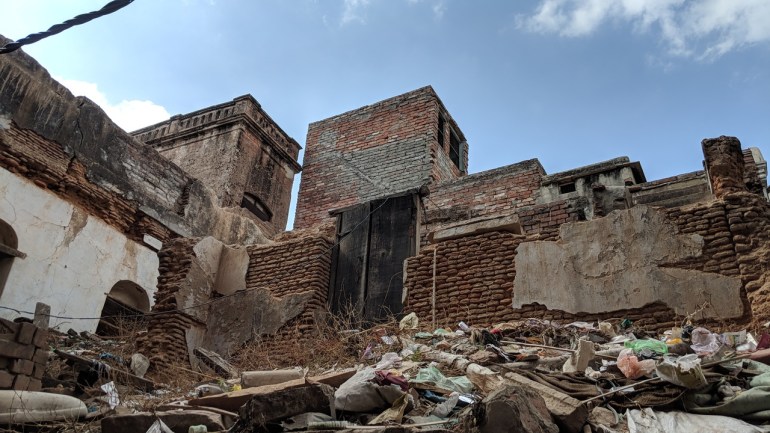
I heard — but have not been able to verify — that new construction is not allowed in the city’s old section near the river. This is extremely believable, given the many fallen-down buildings I saw. From the roof of my hotel, I was able to observe a cricket game in an abandoned lot to the south, a cramped cow enclosure directly to the east, an ancient temple roof being slowly consumed by a banyan tree directly to the north, and a mini-slum of tarp houses directly to the west. The use of space feels improvised, ad hoc, and shifting in way that’s remarkable for a place that simultaneously feels so deeply settled. (No doubt there are countless formal and informal arrangements that govern this and just aren’t legible to a visitor like me.)
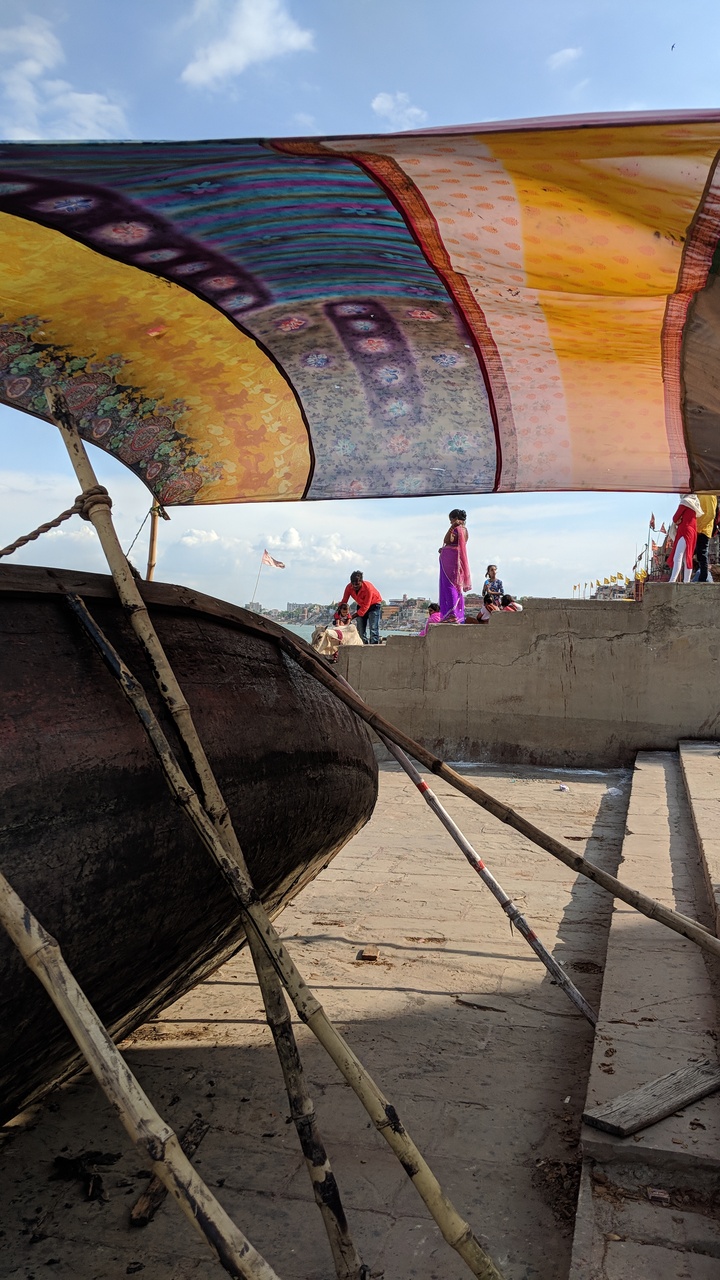
Visitors seem to be the driving industry, at least for the old part of town. But it’s not western tourists, mostly, at least not in summer. People from all over India come for a dip in the river’s sacred waters, and the ghats are lined with bathers in the mornings and evenings, pollution be damned. The ghats are the city’s heart: the great patchwork of steps leading down to the water, with 88 distinct areas, each built at a different time, in a different style, with a different purpose and sponsor. People also come to Varanasi to cremate their dead at the famous Manikarnika Ghat, which is said to be a shortcut to moksha, or liberation. You can go and watch, so long as you don’t take any pictures, and can brave both the smoke and the touts trying to scam “donations” to cremate the poor.

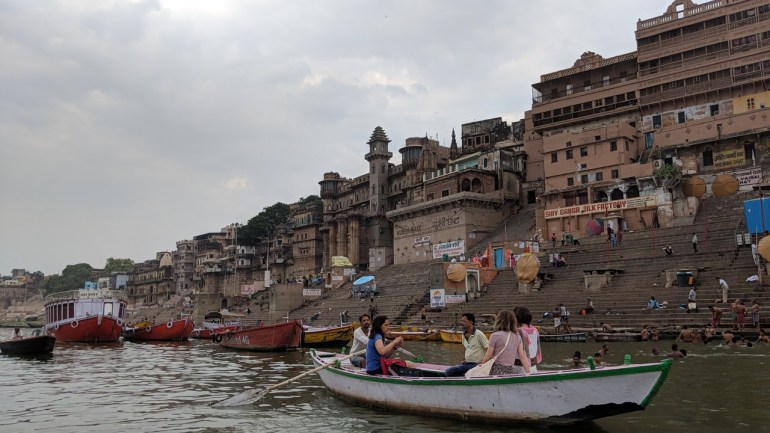
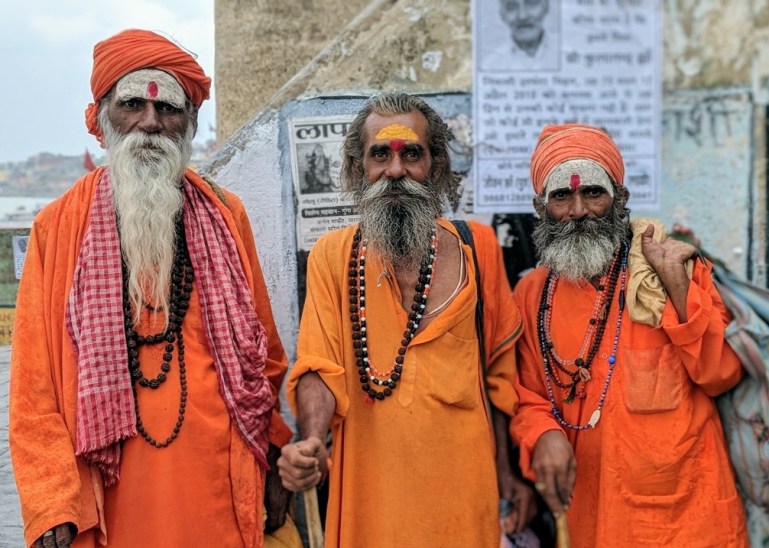

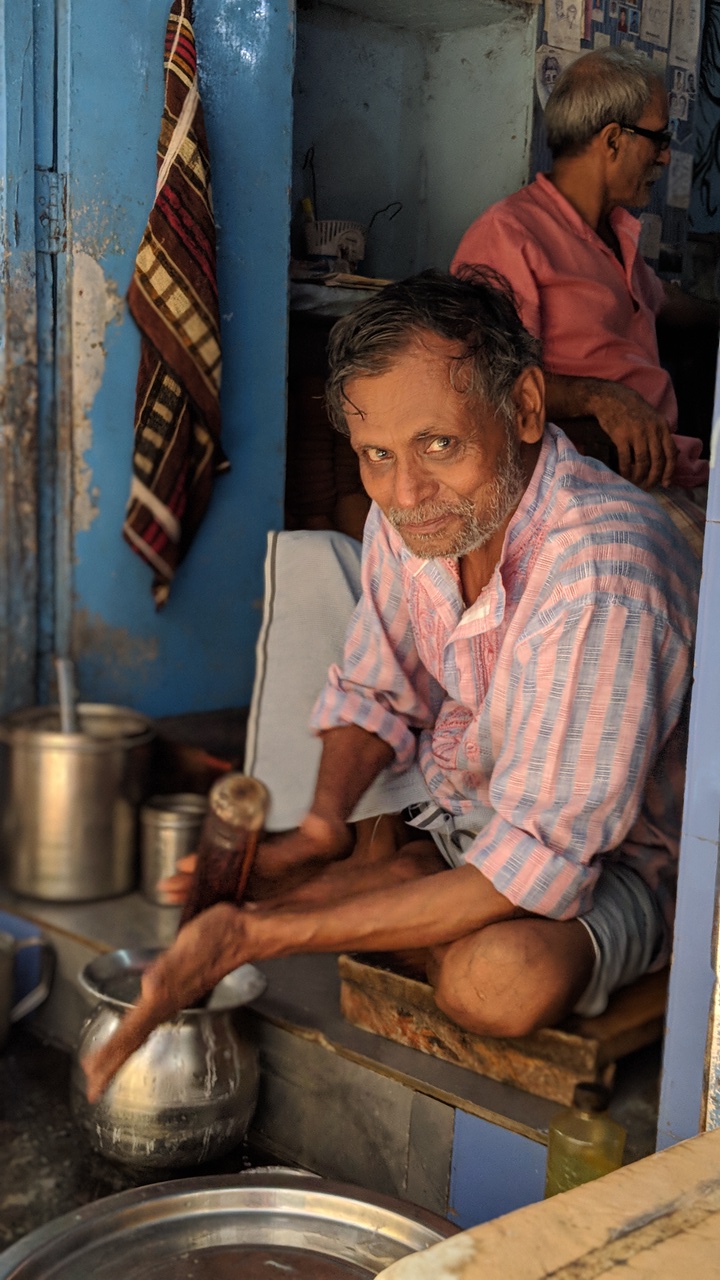
I spent about five days literally just wandering along the ghats and through the gallis, taking pictures of picturesque crumbling, drinking lassi out of clay cups, petting puppies, patting cows, and perfecting my “no, thank you” vendor rebuff. I could have happily done it for five more, and then some.
India isn’t a country you can make much of a dent in in three weeks, but evidently that’s just enough time to start to get why people fall in love with the place. Like Varanasi, it’s singular. It’s hot and chaotic and crowded and a lot — and layered and contradictory and old and full of grace.
Transit/Traveler Notes:
About that bus to Rishikesh: It turns out that bus pickup stops often aren’t at a formal station. If you can take a bus leaving from a formal station, do it. My departure was from a huge intersection — basically a great X with approximately 100 feet of heedless, chaotic, mixed traffic marking each arm. My bus ticket said “pickup: 11:30 PM, departure: 9:30 PM,” and provided three entirely defunct contact phone numbers in place of more specific location details. I spent the hours from 9:00 to 12:00 wandering increasingly desperately, all my luggage in hand, through the daunting traffic, to each of the giant intersection’s many curbs. There were more than 50 unmarked buses scattered about, and I must have asked over a dozen people for directions, each of whom waved me on to a different corner. Finally, I sat down on one of the curbs and cried, at which point a random bus driver took pity on me and told me to get on his bus. He took me to a totally different part of the city, to another informal concatenation of buses, and steered me toward a specific one. I got on. There was a minor spat between the bus driver and some other passengers regarding me and seating arrangements, leaving me still unsure that I was on my bus. I made it, but… on second thought, if you can take a train, do it.
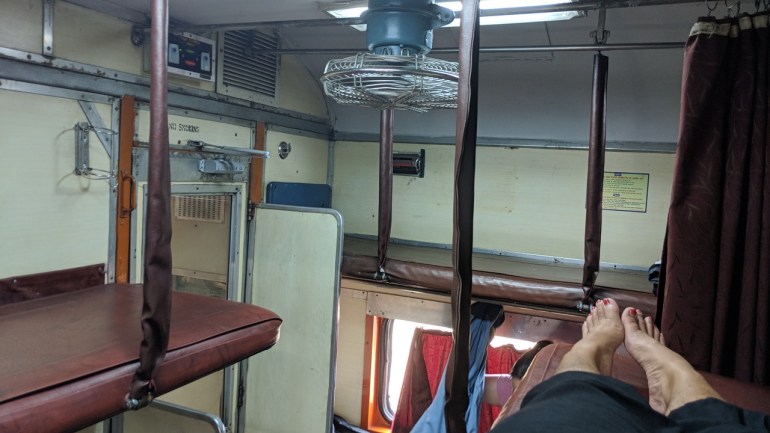
Train from Rishikesh to Delhi: I bought the last train ticket I could get online, which turned out to be an un-air-conditioned car. I was the only foreigner, of course. I know I’ve been talking about the heat a lot, but it honestly felt like an oven. I basically went into a fugue state for 6 hours. If you are traveling in summer and can get an AC car, then good lord take the AC car.
Train from Delhi to Varanasi: I got a soft sleeper for this leg, which was air conditioned and decently comfy. The berths are open, so it’s smart to take a chain to lock down your bag. I was on the top bunk, which means a bit more security, but also a precarious climb and no views. There are vendors selling chai and food that ply the aisles, but they seem to operate on an unpredictable schedule. Bring at least some of your own provisions (and, of course, toilet paper).
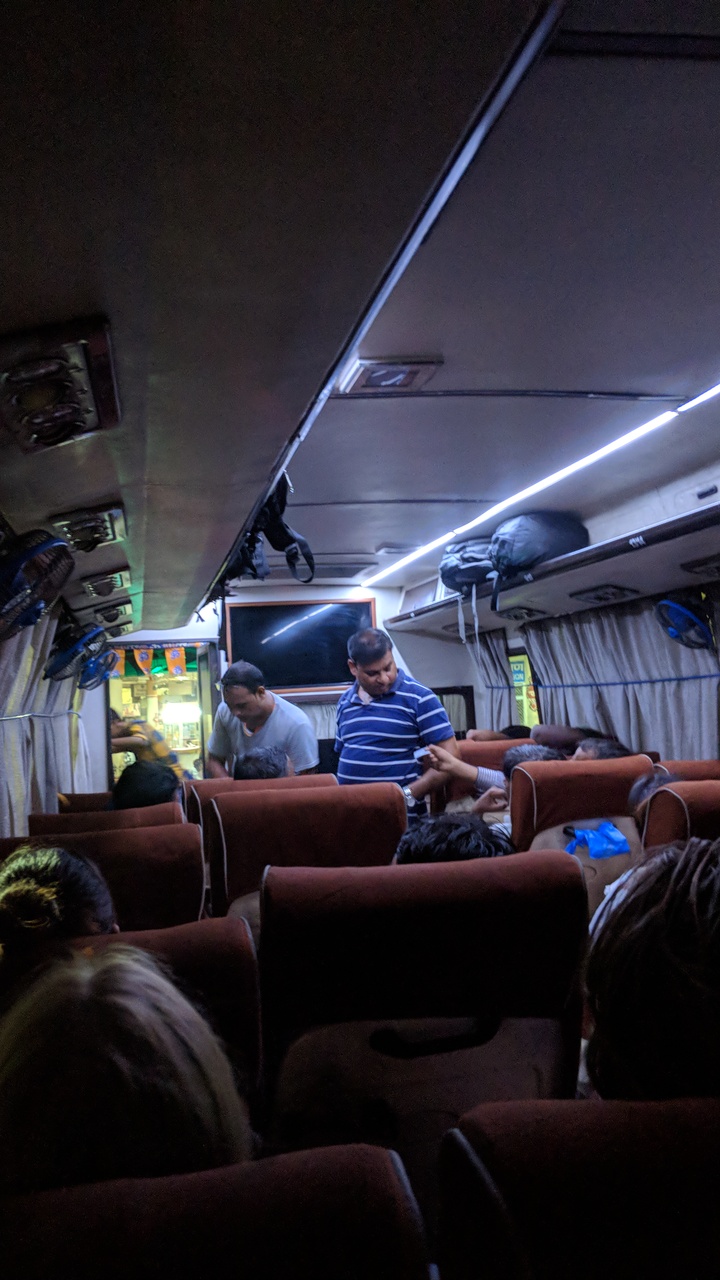
Bus from Varanasi to Kathmandu: Nepal was my next destination after Varanasi, so I took a bus from there to Kathmandu. It left at night and got there the next afternoon — about 21 hours total. Non-AC buses are daily, I think, and AC buses about twice a week.
You can buy tickets from the bus station (down and across the street from the train station), online, or from a vendor. I at first bought mine through my hotel for a small markup. On my first attempt, I got to the station only to find that the bus had been cancelled due to “mechanical problems,” which they assured me would be resolved by the next day. I had to buy a new ticket and get a refund from my hotel, since they couldn’t just roll over the existing one. Leave an extra day for stuff like this if your schedule isn’t flexible.
The bus wasn’t a sleeper, but was reasonably comfy. It didn’t have a bathroom, but made enough stops. (Pet peeve: some of the stops are inevitably side-of-the-road stops, which are a bit more appropriate for men than women.) Random note: There are a lot of wasps about, especially going through the terai. I had to kill one that was buzzing angrily around my window with my iPad. I felt terrible about it for the whole trip.
The border crossing was relatively easy. You have to get off to stamp out of India, where they will tell you it’s not legal to take Indian currency into Nepal, so you need to exchange it with their friend across the street at conveniently exorbitant rates. This is probably true, but no one is counting your cash. I fell for this, but in retrospect would have hung on for a better rate in Kathmandu. EDIT: Evidently it’s not legal to carry Indian notes over 500RS in Nepal…so, yeah, those you should exchange.
You can get your Nepal visa on arrival, but make sure to have crisp, clean USD! A Danish couple that crossed with me were almost SOL when they rejected a $20 with a tiny pen mark on it. (They were able to borrow from another guy with us, thankfully.)
As always, don’t take any of this advice without also reading up on the Man in Seat 61 blog.
 Grounded
There is good research that points to the power of community singing to quickly forge social bonds. (Or maybe it was God).
LikeLike