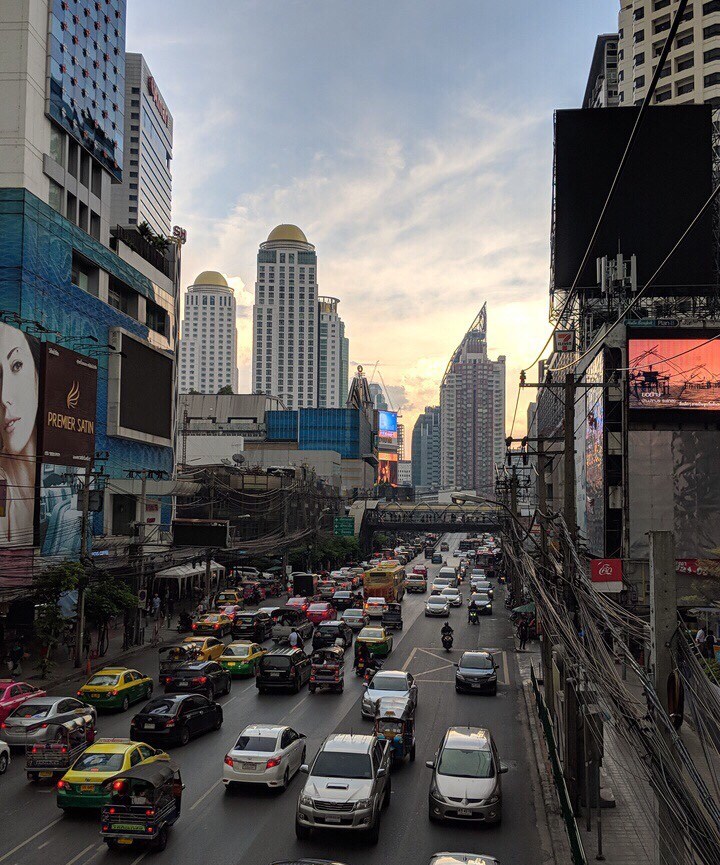

“Amazing Thailand” — that’s their slogan, not mine, “they” being the Thai tourism authority. And boy do they know their business: with over 35 million visitors a year, Thailand is one of the most visited countries in the world. It’s the grand dame of the SE Asia backpacker circuit, and Bangkok is its crown jewel.
A couple countries ago, I’d promised my friend Tom that I’d meet up with him for his birthday, and we figured Bangkok was the right place for two old fogies like us to get their party on.
I had to hustle through Laos a bit to make it work, but I caught a sleeper train from Vientiane to Bangkok just one day after we’d planned. I pulled into the Hua Lamphong train station at 6am, caught my first Thai tuk tuk to our Airbnb, and hauled Tom out of bed. Turns out just one of us is an old fogey: Tom had barely gotten into bed before I showed up, having been out till the wee hours partaking of Bangkok’s famous nightlife.
Tom and I have different travel styles: he likes to stay out late and make new friends; I like to get up early and do yoga. So we compromised. I went out for a couple of great nights in Bangkok, including one extremely excellent drag show in a tiny bar in Pat Pong and 4am street Pad Thai on Khao San Road.
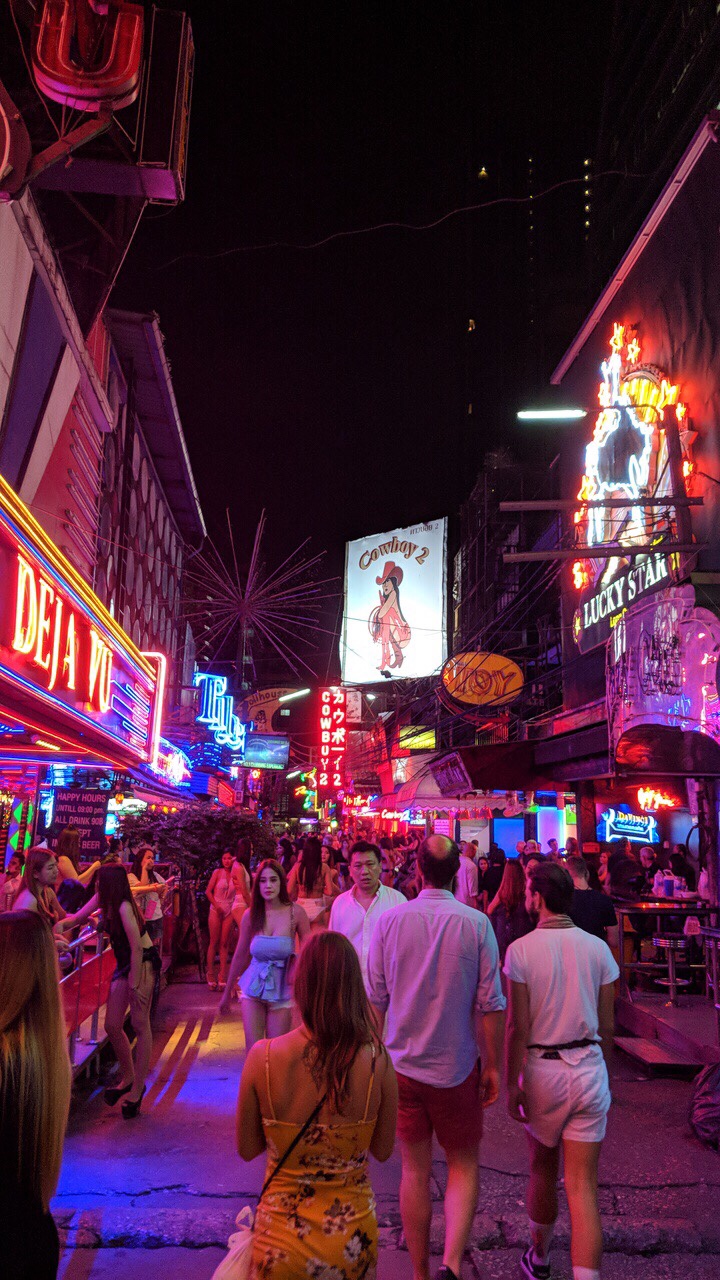
I loved Bangkok more for its food and general craziness than its nightlife, though. We visited the bafflingly huge and excellent Chatuchak open air weekend market, the slightly less huge but crazy delicious Ratchada night market, and another super weird night market that was totally empty and featured a large decommissioned airplane. (The later was extremely out of the way. After an hour in a tuk tuk, it became apparent we were lost, and we had the guy let us off at a random spot to sort of ambivalently follow our Google map directions on foot — an adventure!) We also took in a sort of mediocre food tour, which nonetheless showed us a corner of the city otherwise devoid of tourists and treated us to a delicious noodle dish & my possibly all time favorite food, Thai style coconut pancakes.
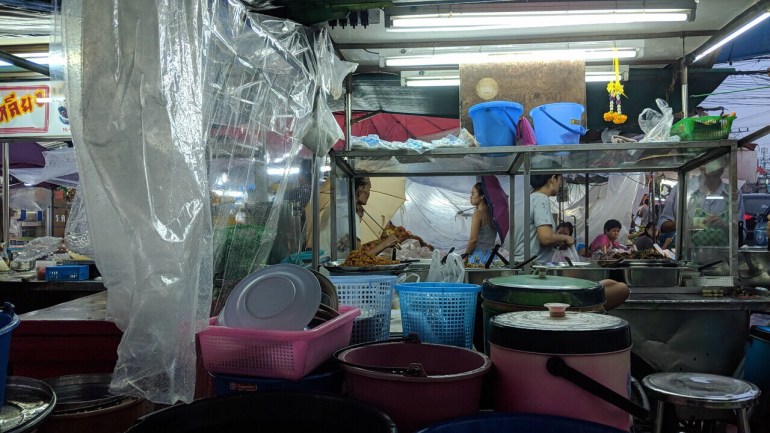
Bangkok also has a plethora of indoor shopping centers — I guess you could call them malls, but that seems kind of dated — of varying degrees of fanciness. I spent a frustratingly large number of hours visiting way too many of them in an attempt to find shorts that fit. (Shout out to shopping in Asia as a non-tiny person!) And you know what? In my admittedly limited experience, the expansive shopping center food courts are one of the best places to eat in the city, hands down. It’s a weird world.
So after almost a week of eating, drinking, and wandering about in Bangkok, I convinced Tom to take a 14 hr bus + ferry combo trip down to Koh Samui. It wasn’t the best bus trip I’ve been on — they let us off for “dinner” at 2am — but neither was it the worst. There was a lady near us, though, who complained as we disembarked that it was the worst experience of her life. So this is the worst experience of my life became our running touchstone for our next few days on Koh Samui, where we literally did nothing but lie on the beach, lie under palapas, drink out of coconuts, eat coconut ice cream out of coconuts, and go to yoga class. Amazing.
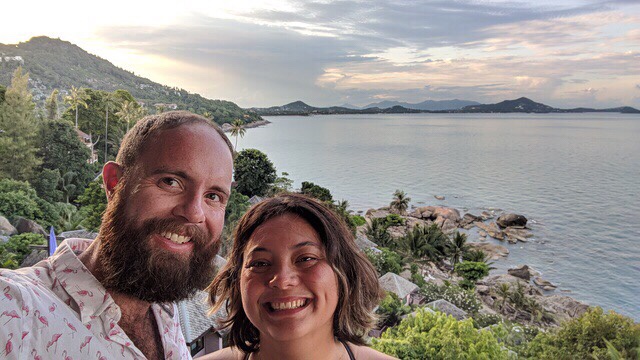
I didn’t really get off the beaten path in Thailand. For one thing, all the paths are a lot more beaten than in, say, Laos, and also there are some great destination activities to keep you busy. After Tom and I parted ways, I headed north to Koh Tao to do something I’ve been intending to do for years: get my open water scuba certification. A guy I met in a hostel in Hong Kong had so raved about his experience getting certified in Koh Tao — and about how cheap it was — that it finally tipped the scales for me.
I’d been putting scuba certification off in part because I’m a worrier, and I worried that I’d worry underwater and that the worry would turn to panic. But I loved it! I loved it so much that I stayed on and did my advanced open water certification after I did my regular open water. (Shout out to Sairee Cottages dive school.)
Descents still freaked me out a little by the end, but on the whole I felt safer under water than on the surface. Probably my scariest moment was when we were snorkeling between dives and a Titan triggerfish started chasing me. They have a mean bite! Undoubtedly the best moment was when we were diving at a spot way offshore where big schools of fish tend to congregate. At one point, my group swam directly into a huge school of juvenile barracuda — which aren’t dangerous — and they surrounded us so completely that at some points you couldn’t see through to the other side. They swam around us in a circle just beyond arm’s reach, a great flickering silver cyclone of bodies and tails and eyes. (I was trying so hard to be mindful in the moment, both to really be there fully and to fix it in my memory. Diving is a great exercise in mindfulness.)
Koh Tao is pretty special. I texted my partner, who has been trying to get me to get certified for years, that we should drop everything and move to Koh Tao and become dive instructors. I was only like 60% joking.
But I couldn’t linger as long as I would have liked in the islands, because I had another pre-scheduled appointment: I’d embraced my identity as a full-on serial elephant tourist, and I was set to volunteer at Asia’s pioneering ethical elephant sanctuary, Elephant Nature Park outside of Chiang Mai.
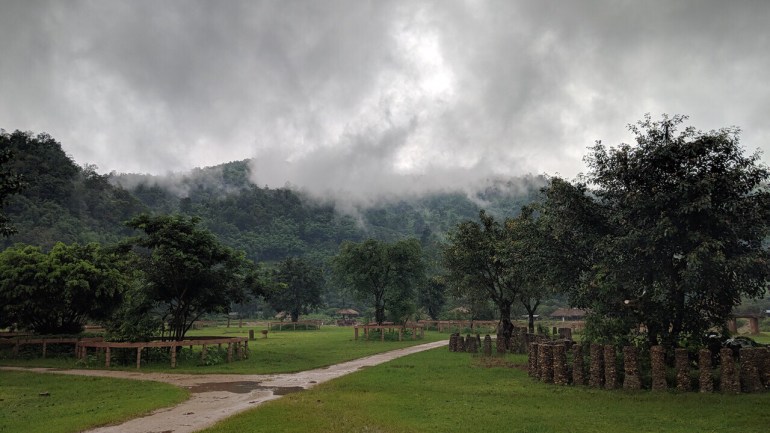
Once I got to ENP I had no regrets, however. I wrote on Instagram at the time that it might be my personal heaven, and I wasn’t even remotely joking. ENP is situated on a bend in the Ping River, surrounded by lush green hills. It’s positively overrun with not only elephants rescued from the logging and tourist trades, but also hundreds of rescued dogs and cats. After a couple of months of being wary of touching the dogs I encountered, I was so happy to get to sit in a kennel and cuddle mutts for hours on end. I also spent my week doing things like shoveling elephant dung and unloading pineapple trucks — hard work, but made 10,000 times worth it by the periodic opportunity to get up close and personal with hungry elephants, and by the fact that the whole endeavor was so clearly a labor of love.
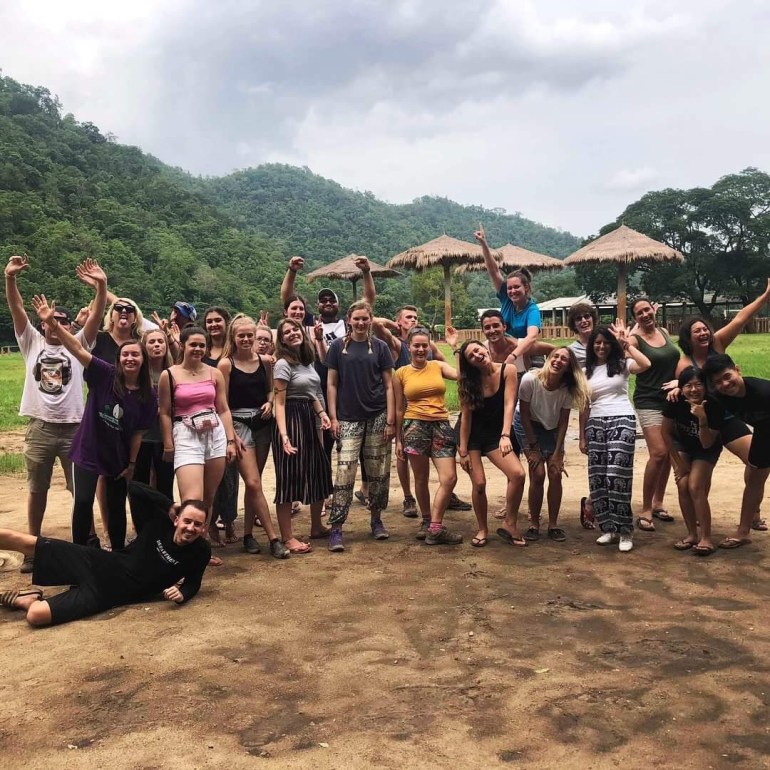
At one point, we were all herded into their rustic “conference room” and made to watch a video about the conditions working elephants endure. It was utterly horrifying, and surprising even to me (I tend to be unsurprised by human cruelty, honestly). Long story short: even if a working or performing elephant looks OK in the moment — twirling on a pedestal in a circus, say, or painting a simple picture for tourists, or tolerating humans on its back — the training process to get it to that point involves outright torture and ongoing terror. If you wanna go on a trip to Asia and see elephants, go to a legitimate sanctuary that doesn’t make the elephants do anything but eat and sleep and maybe walk unencumbered after a banana treat.
Lek, the ENP founder, gave a talk about their work too, and that woman is all kinds of impressive. I usually err on the side of wariness when it comes to organizations with prominent, charismatic founders, because that can lead to all sorts of issues. But Lek won me over entirely. She was born very poor and a member of the Khmu people, who are a tiny minority in Thailand. That ENP exists and has had such a huge impact — not only do they have 80 elephants under their care, but to-date they’ve convinced more than 22 tourist elephant camps in Thailand to switch to more humane practices — is a testament to her sheer willpower and tenacity. They even made a Hollywood documentary about her.
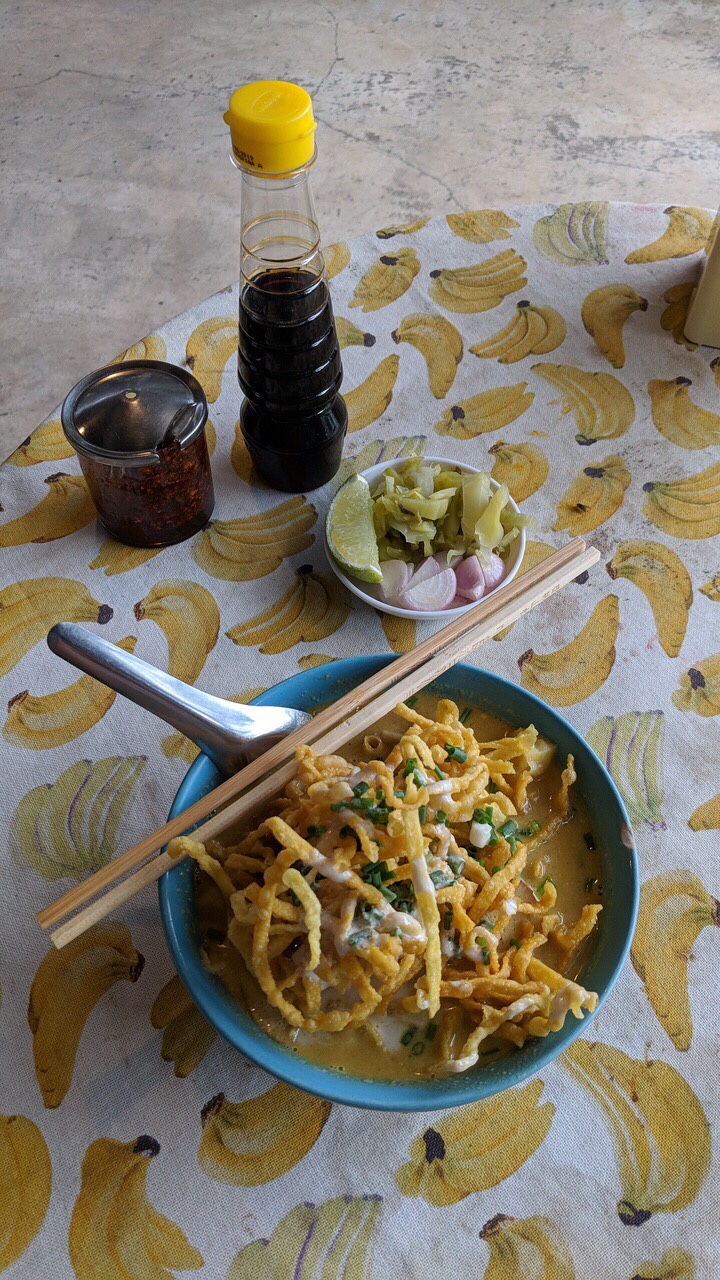
After my wonderful week at ENP, I had a few more days to hang out in Chiang Mai, which is a lovely town with lots of cafes and an ancient wall + moat combo encircling its old town. It also has a surprising number of English language bookstores and hands-down the best vegetarian food in Southeast Asia. I’m not sure I’ll ever eat anything quite as delicious as veggie Khao Soi.
I spent a big chunk of my time there getting rid of the bed bugs that — after tracing my steps and trying to pinpoint the start of my itchiness, which is a pretty dodgy process given how many different bugs have bitten me in the past couple months — I’m pretty sure I picked up in a Bangkok hostel on the way north. Bed bugs are horrid, but that’s how much I loved both ENP and Chiang Mai: I had possibly the worst, most itchy, grossest-looking skin related ailment of my life while there, and it’s sort of an addendum in my memory.
So Thailand is kind of amazing, hordes of drunk 20 year old backpackers and all. Like so much of Southeast Asia, the politics are pretty fucked though. (Shoutout to my dear US of A and our own desperately fucked politics!)
One of the weirdest things Tom and I did in Bangkok was a visit to the Museum of Siam, which hosts a permanent exhibit called “decoding Thainess.” The exhibit is a heavily designed experience that leads visitors through 14 rooms with themes around topics like history, dress, and food. It took us about 5 minutes to get freaked out by the heavily propagandistic tone, but it was such a fascinating spectacle that we stayed for the whole thing.
Thailand has been ruled by a junta government since 2014’s coup. Evidently shoring up the idea of “Thainess” is a pet concern of theirs, with “Discover Thainess” even having joined “Amazing Thailand” as a tourism slogan. According to the Museum of Siam, the three pillars of Thainess are “nation, religion, and king.” Certainly there’s plenty of visible evidence that Thai people love their king (well, the old one maybe; not so much the new one, despite the many, many portraits of him all over the country). Religion is pretty ubiquitously visible too. But this exhibit did protest too much: of the many “games” visitors were asked to play, one was basically a test to underscore that nation-religion-king bit and another was matching different outfits on mannequins with their degree of “Thainess.” The traditional outfit of a Keren girl — one of the country’s many ethnic minorities — was placed dead last, even ranking behind a replica of one of Lady Gaga’s costumes. This was… problematic, to say the least.
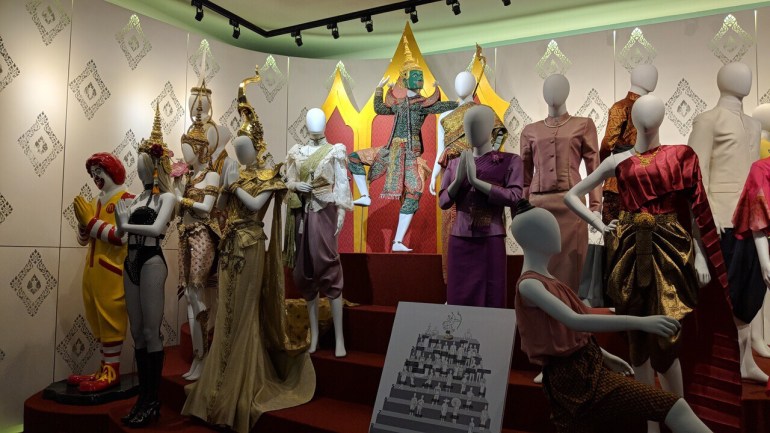
Thailand is diverse, and “Thainess” is to some extent an artificial idea constructed by politicians past and present to accomplish political aims. Weirdly, the Museum of Siam agreed on this point, and was quite up front about how that national identity has been created and promoted.
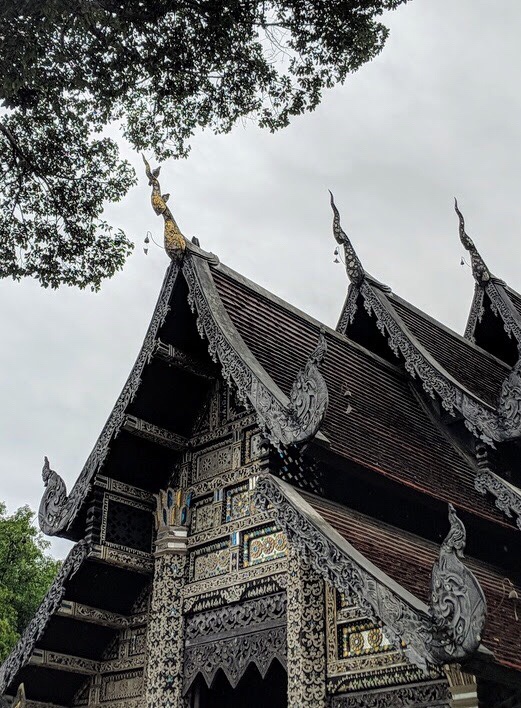
My own experience of Southeast Asia writ large has been been marked much more by commonalities than differences, from one country to the next. Ethnic minority communities like the Khmu and Hmong bridge national boundaries, especially in the north of the region. Thai religion has deep Indian roots. Lao people mostly watch Thai TV. From rooflines to noodle soups, my picture of Southeast Asia resembles that Museum of Siam exhibition not at all: It’s more as if a giant, armed with a great sponge, had smeared those national boundaries away, leaving in their place bright centers of culture, practice, architecture, dress, and food — and a lot of complicated, brilliantly shaded areas in between.
Notes for travelers:
If you’re not familIar with the Man in Seat 61 website, then run don’t walk over there. Basically everything you need. But for my own first-hand account:
To get to Bangkok from Vientiane by train, you start from a little depot in the middle of nowhere on the Laos side, called Dongphosy. It’s a bit less than an hour’s taxi ride outside of Vientiane. There, you stamp out of Laos and buy your ticket for the little train — it’s heavy rail, but has just one or two cars and feels kind of tram-like — across the Mekong to the Thai side. Seems like there’s not much reason to book this bit ahead. On the Thai side, you disembark and get your passport checked, then wait in the provincial little rail station for an hour or so. You should definitely have this Thai leg of your trip booked in advance. Also, there’s not much in the way of provisions at the station.
Not knowing what to expect, I sprung for a first class berth on the sleeper. My cabin was shared by just one other person, and we had a locking door. However, when making my way to the very nice dining car, I passed through the second class sleeper section, and thought it looked plenty comfy.
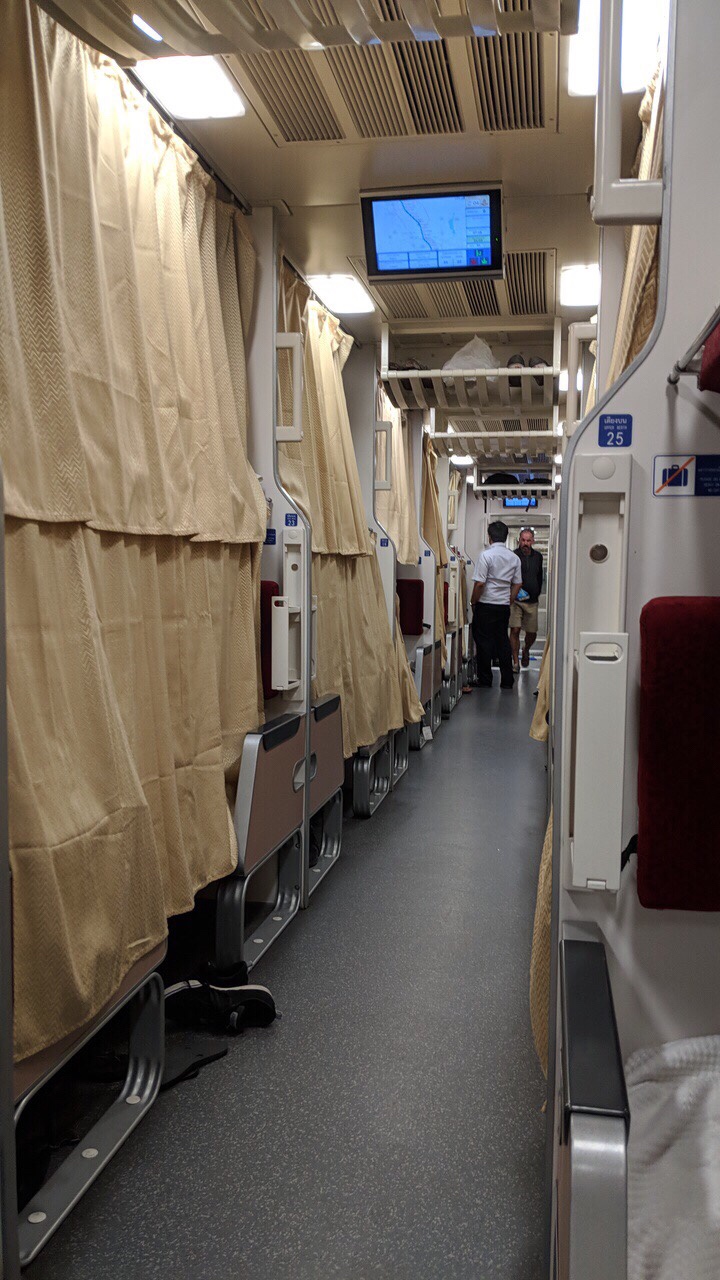
On my trip north from Bangkok to Chiang Mai, I went with a second class sleeper. They are indeed plenty comfy. The beds are all in an open car with no locking doors, but they’re clean and wide and have privacy curtains. It can also be a bit more social. You leave late and arrive early, so most of the drive is invisible, but you do get some totally breathtaking views of the countryside outside of Chiang Mai right at the end, especially if you wake up just a bit early.
To get to the islands, there are numerous companies who would like to sell you combination bus + ferry tickets, or you can diy it. (If you diy it, train is also an option.) The buses all leave from the Khao San Road area. They stop about halfway down the peninsula for dinner at a huge rest area that seems intended just for this purpose, then let you off, typically in the early morning, at one of the many ferry ports down south. On the whole, they’re not super but decent. Seats don’t lean back that far, but at least you’re not crammed in, and there’s a toilet. Bring your own coffee for the morning.
 Grounded
When I visited Bangkok, I really should have planned ahead better. It is such a big city, it takes so long to get from A to B, I couldn’t just wing it like I did in Venice or Vienna.
LikeLike