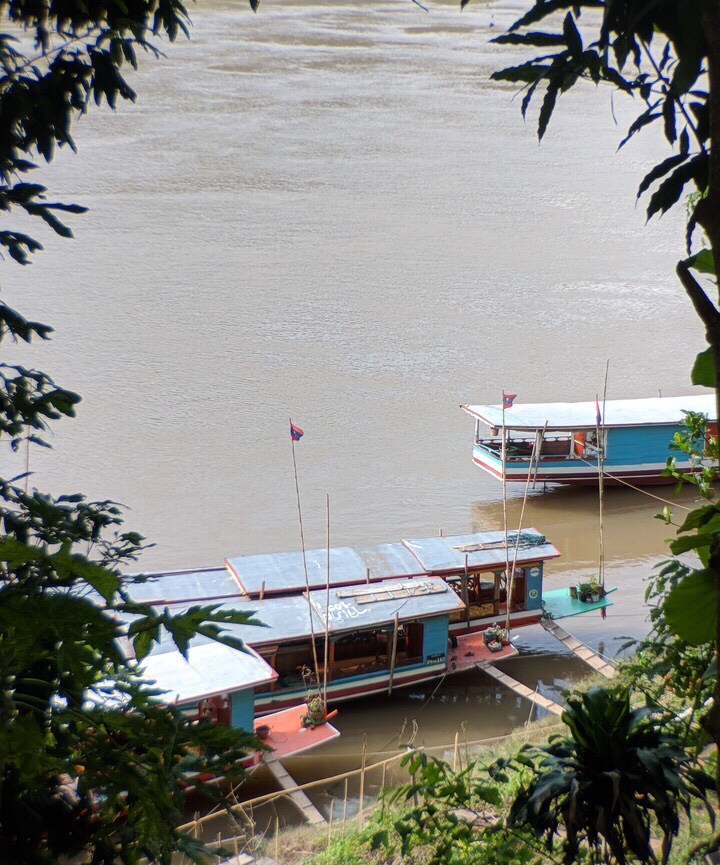

I took a bus from Hanoi to Luang Prabang, in Laos. It was billed as 24 hours, but took about 27. And it was a long 27.
The overnight bus passes through some incredible countryside traversing the high border hills. I slept through much of the Vietnam side though, unfortunately. Well, “slept” is generous. Even though we left Hanoi with approximately 1 person per seat, we kept adding both people and cargo until the narrow aisles were filled: toward the back with boxes and sacks, and then further up with dudes attempting to sleep. I’m not sure if it was deliberate or a function of not having anywhere to put his extremities, but the guy to my left kept throwing arms and legs over me. At one point, I felt a hand wriggling on my thigh, which I silently but firmly flung off.
Certainly there wasn’t enough room to get up, and in fact, because of the bunk bed-style sleeper bus design, sitting up straight was also off the menu. I’m pretty sure we stopped for bathroom breaks all of five times in 27 hours, so I popped a couple Advil and basically stopped drinking water. I’ve never been so excited to get off a vehicle in my life.
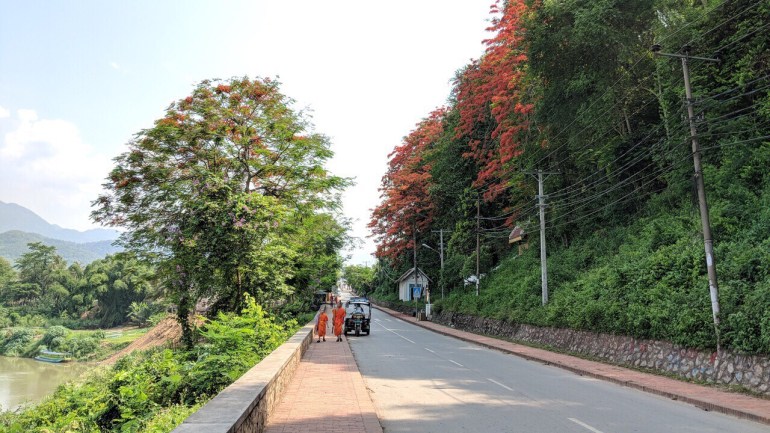
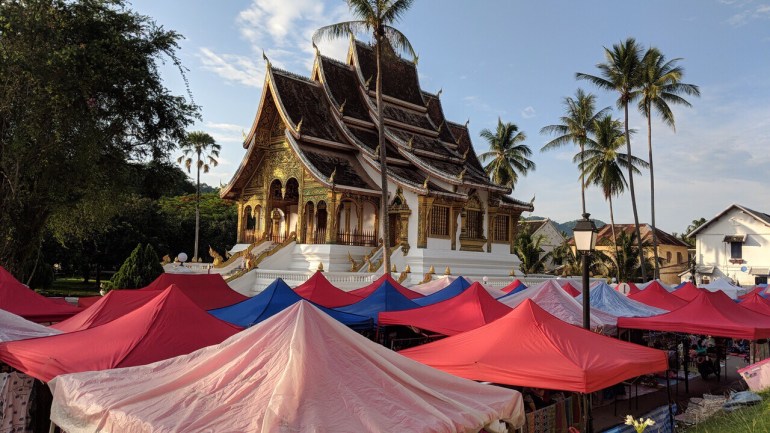
But Luang Prabang? Luang Prabang was worth it. I loved it immediately. The town’s picturesque old heart is situated on a peninsula formed by the intersection of the Mekong and Nam Khan rivers. In the center is a steep, wooded hill topped with an old stupa, with a cluster of old colonial buildings at its foot. It’s riddled with wat compounds — often one right next to the other — and ringed by cafes and eateries along the water. In May, when I was there, the flame trees were blooming, setting off the beautiful saffron robes of hundreds of monks going about their day to day.
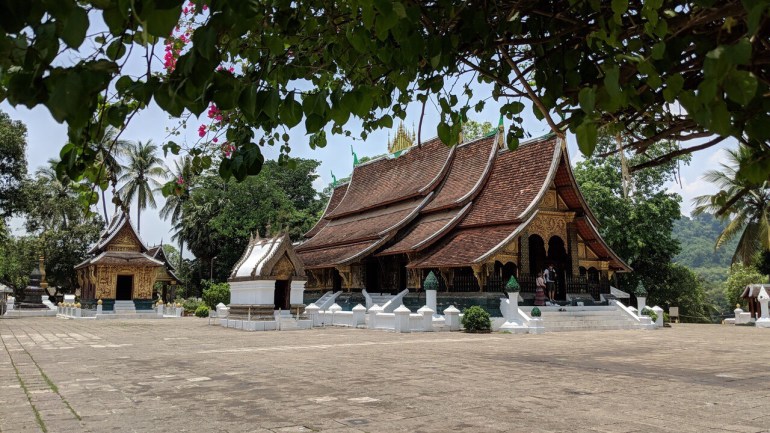
Luang Prabang is Laos’ premiere tourist destination and tiny, but it doesn’t feel at all crowded (except maybe once the excellent night market gets going). I rented a bicycle and tried to go down as many little green backstreets and alleys as I could. I sat in the biggest wat and contemplated the Buddha. I found the most perfect riverside cafe, with a raised, shady platform, an embarrassment of pillows, and an excellent tofu scramble. And I realized perhaps somewhat belatedly why night markets are a thing in Asia — heat!
I also signed up for a three day bike-kayak-trekking-elephants combo tour, which ended up being both awesome and unexpected. On our first day, we biked out of town to an elephant camp about 15km away. I’d been told the advertised elephant ride would be optional, because I’d read that it wasn’t good for the elephants and was feeling ambivalent about it. Well, it turned out that getting on the elephant was the only practical way to get from point A to point B, so I hopped on… and immediately regretted it. Don’t ride elephants, kids: not only is it actually bad for the elephants (it’s hard work and long hours for animals who actually should be eating 20 hours a day) but it’s also terrifying. The camp we were at didn’t use saddles, which in general is better, but also means that you’re sitting astride a lumpy, heaving, jerking surface with a mind of its own, 15 feet off the ground with nothing at all to hold on to.
I survived though, and we headed up the muddy river on a low, speedy longtail boat, passing more elephant camps and the occasional group of mostly submerged water buffalo. A waterfall swim and short-ish forest tramp later, we arrived at our homestay village.
“We” at this point was me, our guide, and one young German woman. The German woman’s friend had started with us, but had fallen ill and turned back after the elephants. Our guide was a friendly young man who knew a lot about the forest, especially hunting and foraging — and whose name I’m now kicking myself for not writing down. He was a member of the Khmu people, the largest minority ethnic group in Laos.
The population of Laos is actually comprised of around 40% ethnic minorities. The government breaks these groups down into three categories, which are more about historic settlement patterns than cultural origins: lowland people, midland people, and highland people. (I was told that these classifications are no longer quite politically correct, yet are still widely used. I saw and heard them used a lot, so I’m not sure what this means exactly — if anyone has more info on respectful usage I’d appreciate it!)
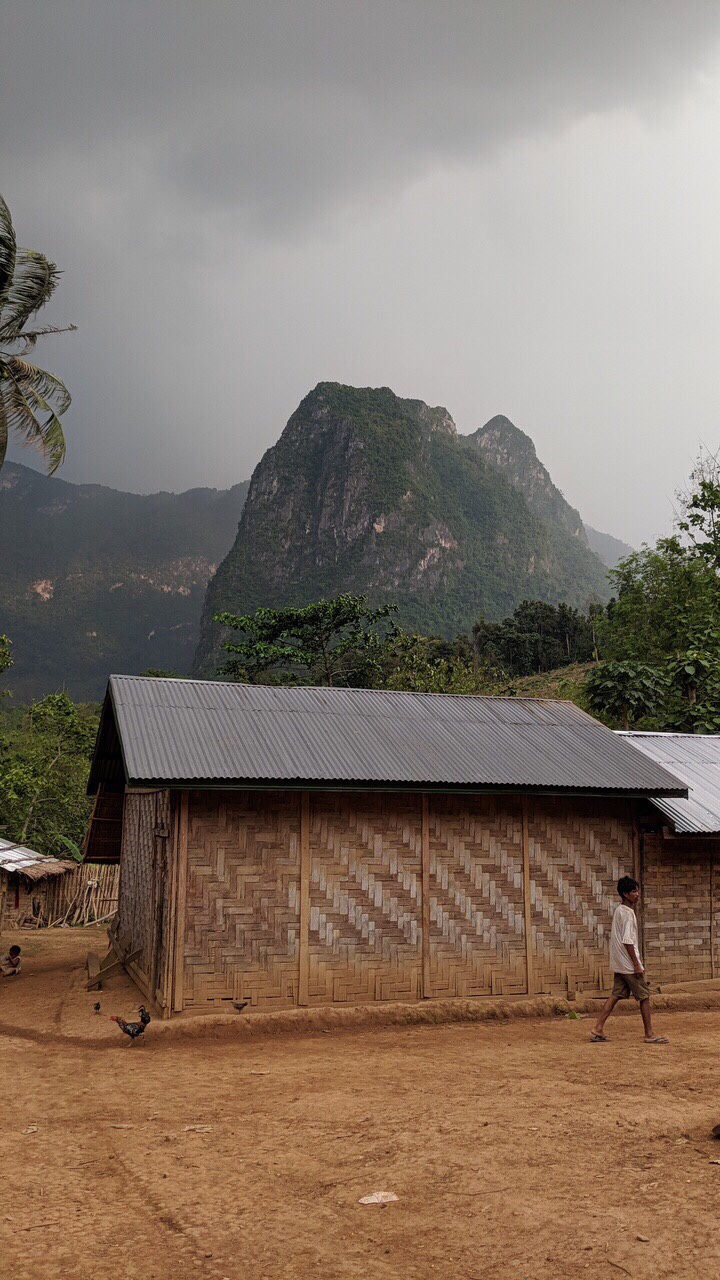 The village we stayed in was a Khmu village. They’re thought to be the indigenous inhabitants of parts of northern Laos, but became “midlands” people as the majority Lao moved in to inhabit the prime lowland agricultural areas. The people of this village were mostly swidden agriculture-practicing subsistence farmers. They grew primarily rice in the surrounding hills, moving their fields every seven years or so and often walking up to an hour to reach their growing areas. They also raised chickens, pigs, and buffalo in and around the village. A couple of houses sold soda, beer, and chips out of their front rooms, and three families had homestay operations, which basically meant having an extension off their main house with a couple of basic rooms. Ours was constructed of traditional materials: sections of bamboo flattened and then woven to create a textile-like effect. (The walls breathe better than wood and are cheaper to replace.) As in nearly all the homes in the village, the floor was dirt. The outhouse bathrooms were of the squatting variety and the sort you “flush” with a bucket of water. Cold showers were likewise accomplished via the same bucket.
We walked around the village with our guide, chatted with folks sitting outside their homes, bought a bowl of searingly spicy noodle soup out of one woman’s kitchen, watched some kids play a familiar game involving lots of string and jumping. One extended family was playing a raucous betting card game, but our guide explained that it wasn’t exactly a party: a child in the family had just died, and this was a form of collective grieving. At another home, someone in the family was very sick, and they were preparing an offering to take into the forest, in the hopes that it would help him get well. It was a waist-high, tiered tower made of banana leaves. On each tier they placed a cone of flowers and a cup of goat blood.
I also saw plenty of evidence of a tragic, ongoing problem that Laos’ people — especially those who live in rural areas — have to contend with, courtesy of the US government: unexploded ordnance left over from the Vietnam War era. In an effort to stop aid and coordination between the Lao communists and the North Vietnamese, the CIA waged what they called the “secret war”. They armed and trained a local militia, consisting largely of Hmong and Khmu people, while at the same time bombing the shit out of the country. Laos is the most heavily bombed nation in history, per capita, with more than two million tons of bombs dropped over the course of the secret war. Much of that hasn’t exploded — yet. About 20% of Laotian villages are contaminated with unexploded ordnance, and more than 20,000 people have been killed or injured by old American bombs since the end of the war. In the village I stayed in, we saw old bomb parts appropriated for a number of purposes, included as an anvil for pounding other scrap. We also met an old man who was a veteran of the war; far from resenting me as an American, he was jolly and sanguine about it all, and his war service seemed to be something he was proud of. I didn’t ask which side he’d faught on. (Anthony Bourdain does a better job than I ever could telling this story — you should watch the Parts Unknown Laos episode.)
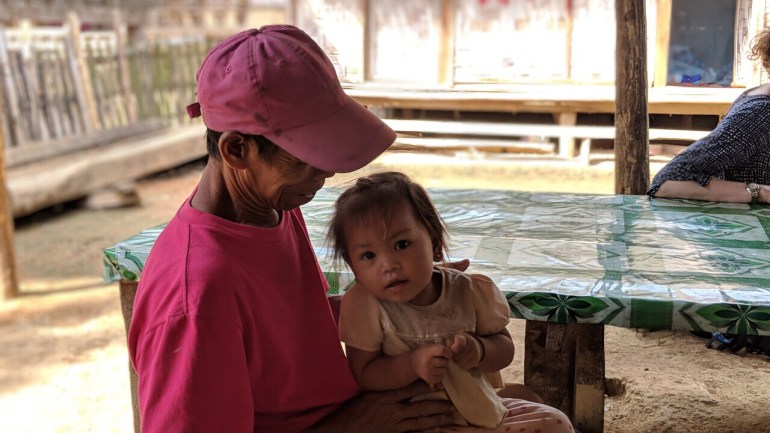
After our village wanderings, we ate a delicious meal of sticky rice, chicken stew, and what looked like potato greens with the family — grandpa, grandma, and a very shy toddler, whose mom was away working in the city — and turned in early. In the morning, my German comrade reported increasing stomach distress, so our planned day of trekking through the jungle got put on hold. I was illness-free and feeling lucky: the night before we’d seen and heard the preparations for a big wedding, which was set to happen that day. I was thrilled to be able to go to a Lao wedding in place of pulling leeches off my feet in the forest.
It turns out that Lao weddings are much like weddings just about anywhere, at least in the fact that they involve a lot of drinking, some awkward dancing, and, often, big rented tents. The day was long and a bit of a blur, but a few things stand out in my memory:
- The groom, accompanied by his singing and drumming relatives, led a festive procession to the bride’s house. Some old uncle was happily passing out shots as everyone walked along.
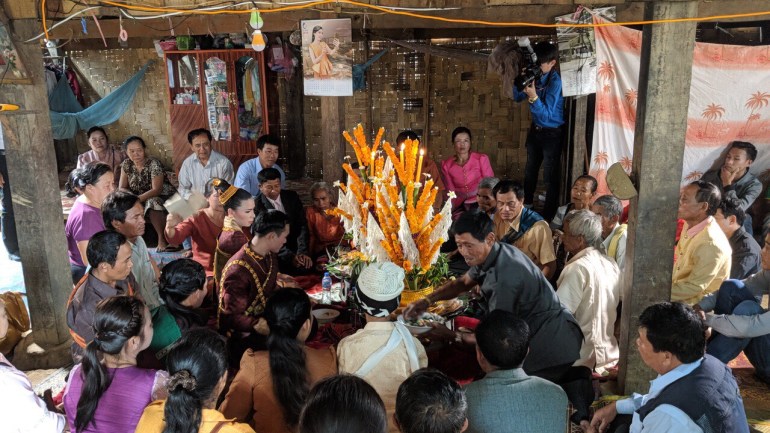
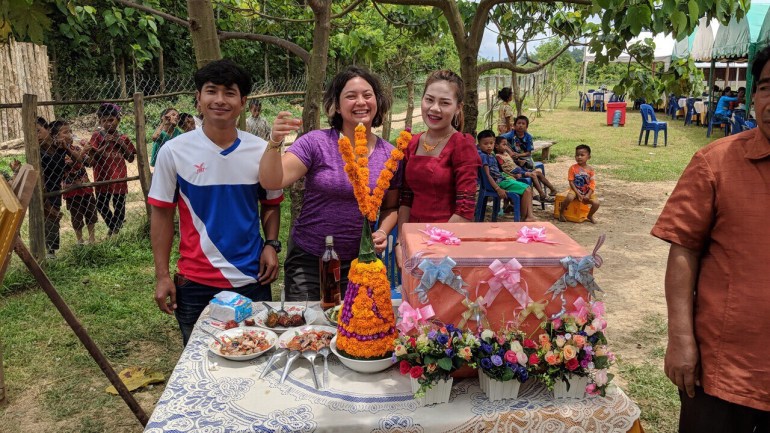
- The bride and groom were dressed fabulously in traditional outfits. They sat around two great, complex arrangements constructed of banana leaves, marigolds, plumeria, and cotton twine. Each held an a bit of twine throughout the ceremony, which connected them to the arrangements and each other. They looked very hot.
- The village chief spoke at length. Everyone tied bits of the twine around the couple’s wrists with good luck wishes.
- I stepped in a puddle of blood on the floor during the ceremony.
- Afterward, I was invited to help welcome people to the reception, offering them bites of food and shots of rice whiskey. I felt very underdressed for this duty.
- Not everyone from the village was invited, and lots of kids hung around the entrance looking curious and hungry.
- This was one of the village’s wealthier families — the bride’s family had one of the homestays, and she worked in town — so the whole thing was quite a to-do. Food for 200-ish, a hired band, rented furniture, a great, splashy archway of faux flowers at the entrance. Some people came in from town. There was even one Chinese guy who drove his BMW there. (Impressively; the road was not great.)
- Laotians are very proud of their beer. The guy I sat next to spoke excellent English, was very tall, very handsome, very flirty, and very interested in making sure I had plenty to drink. Peer pressure can be a bitch.
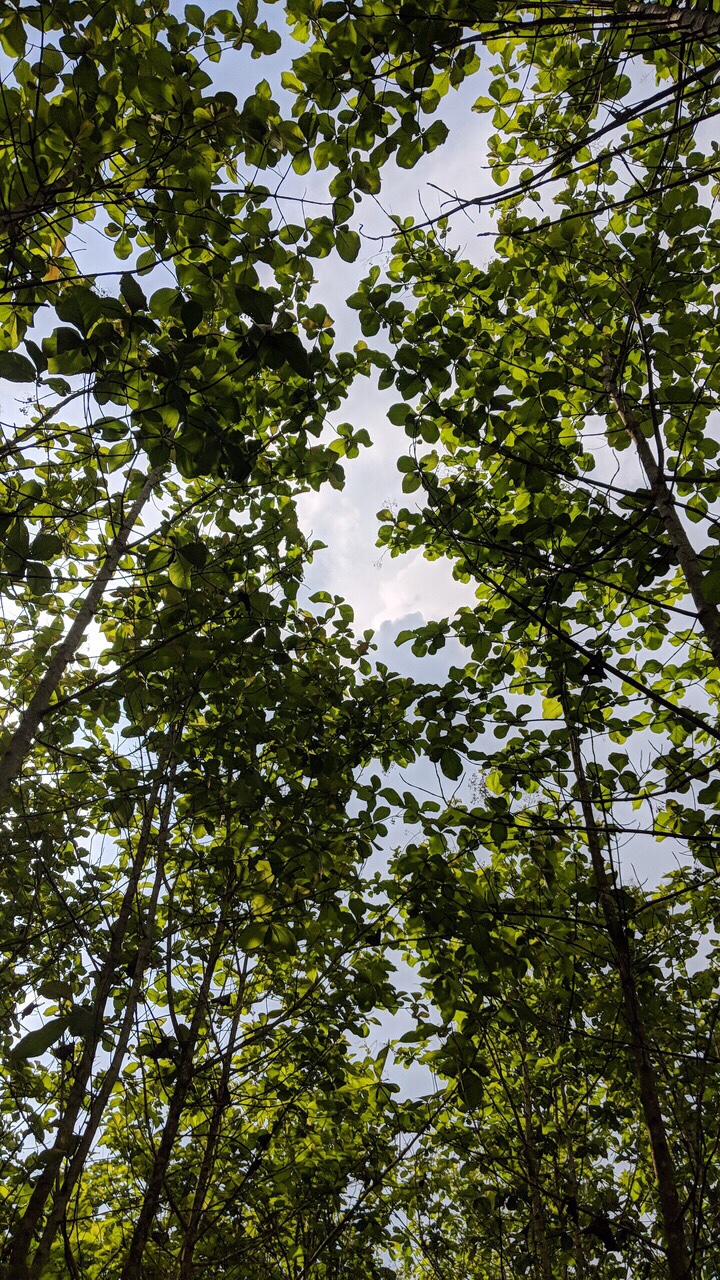
After a day of celebrating and drinking more Beer Lao than was strictly wise, my guide pulled me aside and said we had to head back toward town. The German girl felt worse and worse. So we packed up and headed down the mountain. I remember that late afternoon walk as being positively blissful. Something about the light and hiking drunk through teak forests really did it for me, I dunno.
 We spent that night in a village down by the river and less off the grid, in the home of one of my guide’s friends, who had also incidentally been drinking at the wedding all day. We wrapped up the night with a drinking game involving a chicken head — you put the head in a covered bowl and shake it around, then whoever the beak points at has to finish their glass — and then the next morning we sort of blearily kayaked back to Luang Prabang.
I had two more things to do in Luang Prabang:
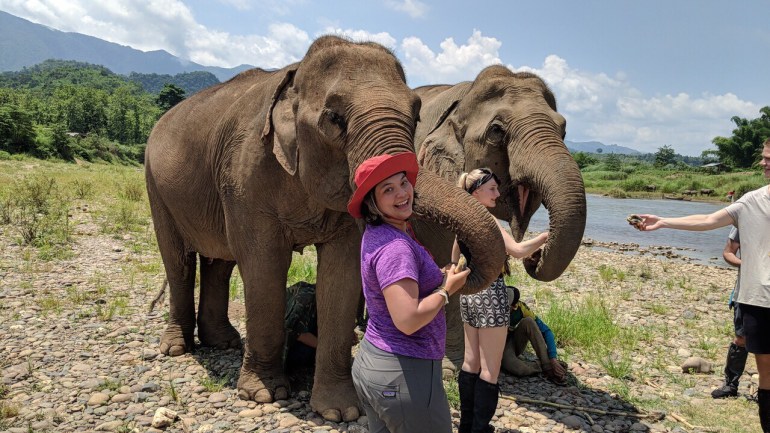
1) Visit an actual, legitimate, welfare-focused elephant sanctuary. I felt incredibly guilty about my elephant ride mishap, and I’d also decided that I really, really liked elephants. I found MandaLao, and spent a beautiful morning learning about elephant conservation efforts — Laos was once known as the “land of a million elephants”, but now there are just 500 or so — and taking a short, sweaty walk with my two new friends, Man and Kam.
2) A day trip to Kuang Si waterfall. I’d seen such trips advertised everywhere and decided that the thing looked way too touristy. But my temporary trekking companions, the ill-fated German women, had convinced me it wasn’t missable. Boy were they right: Kuang Si falls is, I think, the most beautiful waterfall I’ve ever seen — and I’ve seen a lot of waterfalls! With well-trod trails and little bridges threading the area, and isolated packs of sunbathing westerners laying out, Kuang Si isn’t an untouched wilderness by any means. But the blue of the pools is unreal: a light, chalky sky color like a hazy summer day, even in pools just a couple feet deep. (Something to do with high levels of calcium, I think.) I made my way up past the series of small falls and pools, marveling at how each one was more impossibly picturesque than the last. At the top, the big falls literally took my breath away.
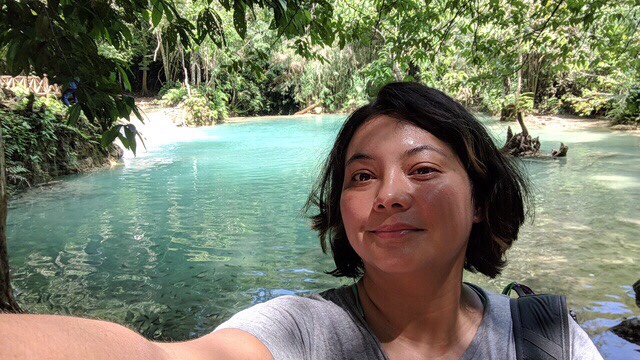
Floating on my back in one of the largest swimming pools, I felt profoundly grateful. What a privilege it is, to swim in an impossibly beautiful Laotian waterfall. What a crazy privilege this whole trip is.
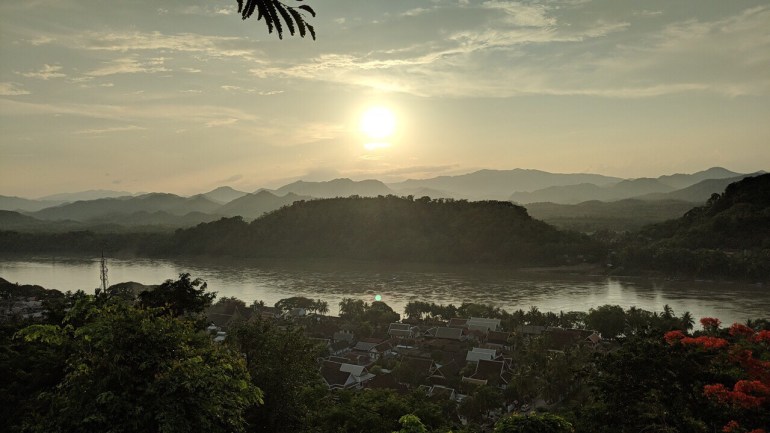
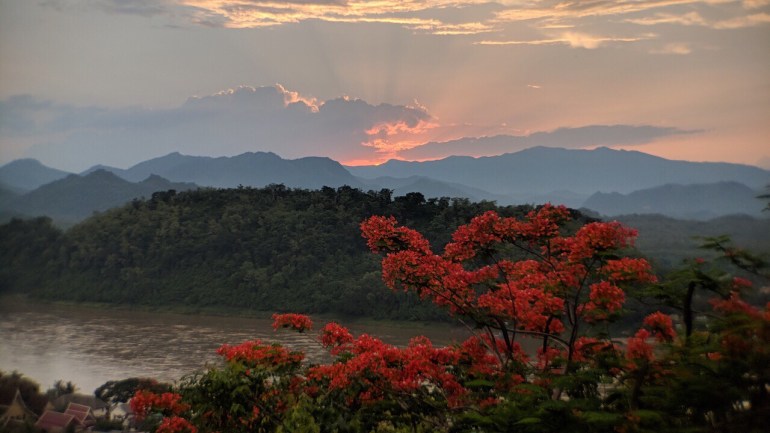
Later, I watched the sunset over the Mekong from the hill in the middle of town, and then treated myself to a dinner at one of the fancier restaurants in town. It was delicious…. but I pretty immediately came down with a stomach bug.
I spent the next five days — first in Luang Prabang and then, after a weird lull in sickness during which I figured I ought to go for a 10 hr van ride, in Vientiane — not daring to venture too far from my hotel/a private, reliable toilet.
In Vientiane, I had three days of bored misery and one really nice night discovering the night market along the river. When I get food poisoning, though, I have this weird overwhelming desire to eat nothing but pasta — and whaddya know Vientiane had some of the best pasta I’ve had in Asia, including a place that made their own noodles fresh! I went there for both lunch and dinner one day.
Vientiane, I wish I’d seen more of you. That goes for Laos overall, really. I don’t know if it was the sparsely populated hills that go on forever, the beautiful wats that are so numerous as to seem routine, or the Khmu village’s warm welcome and strange-to-me traditions — but more than anywhere I’ve been so far, Laos made the world seem big.
I don’t know how long it will feel that way to travelers like me. The Chinese are building a railroad that will pass right by Luang Prabang and continue on to Vientiane and eventually Phnom Penh. I saw them digging up river stones and setting great bridge pilings on my kayak down the Nam Khan, and biked past the huge camp they’ve set up outside of town for the labor they brought in. My guide was enthusiastic about the changes on the horizon for his country, but I’m glad I got to visit now.
Notes for travelers:
I’ve read elsewhere that the bus from Hanoi to LP stops and waits for several hours for the border to open, but that wasn’t my experience. We got there right when it opened and got through fairly quickly without a hitch. (Visa on arrival, no extra kickbacks or “fees” beyond the official cost, which if I’m remembering correctly was around $30 USD. Have cash.)
The bus itself, however, was every bit as unpleasant as other accounts have attested to. Be prepared for few bathroom breaks and two food stops. Try to get one of the upper bunks if you can, to avoid crowding into your personal space once the aisles fill up with sleeping dudes in the middle of the night. Stock up on ibuprofen and Valium if you’re so inclined. Bring your own caffeine supply to knock back before going through the border. 27 hours, give or take. I hate the Vietnamese style bunk-bed “sleeper buses” with my life now.
 Grounded
Lovely! Thanks for sharing your stories, they have been fun to read! Enjoyed the stories out of Vietnam and Laos.
LikeLike