
Now that I’m out of China, I feel like I can write a bit more about my time there and in Tibet. And boy did I have some mixed feelings about the latter!
Tibet is breathtakingly beautiful, and the culture is fascinating. But traveling there is weird — in large part because you have to go with a guided tour, through a state-approved agency, with your stops and information consumption thoroughly vetted and your van outfitted with a camera and audio pick-up to make sure your guide doesn’t stray off script.
To rewind just a bit: My overland journey to and through Tibet started in Kathmandu at 4am. It started out bumpy and ended 12 hours of typical Nepalese road later — read: complete with multi-hour roadwork stoppages, plenty of vertical drop offs, spectacular views, and lots of occasions to fear for your life. We took a lot of switchbacks as we climbed toward the Tibet border, and our driver seemed to subscribe to the “just lay on the horn around the corners, anything worth not killing will move” philosophy. We came inches-close to killing a dog or a child at least three times (that I had my eyes open for).
But there was a moment when the clouds parted and I realized just how high we were: below, like fleas on the flank of some great heedless beast, little houses and villages clung to the mountainside — little villages that were themselves impossibly high. I pressed my face out of the Jeep window into the mist and felt the exhilaration of standing on — nay, barrelling forward along — the edge of the void. I felt great… 100% thanks to the altitude medication I’d already started taking in preparation for my week or so on the roof of the world.
My tour group’s real odyssey started that evening, when we missed the border crossing window and had to spend an unplanned night in a little Nepali village poorly supplied with guest houses. I’d paid for a private room and a few people had paid for higher end tours, but the guides attempted to get everyone to cram into one room — the first of many disputes between the guides and their charges. Suffice it to say that of the ten people on my tour, the tour agency fucked up in some way for nearly everyone by the end of the week: a Portuguese couple who didn’t speak English had booked separate, upgraded accommodations throughout but were bundled in with the rest of us, a couple from Spain had signed up for a tour that included a pricey, much-anticipated stop at Everest Base Camp that just never materialized, another Spanish guy had his crossing documents filled out incorrectly by the tour agency, and in my case the agency failed to secure my long-paid-for onward ticket to Beijing until the night before I was to leave.
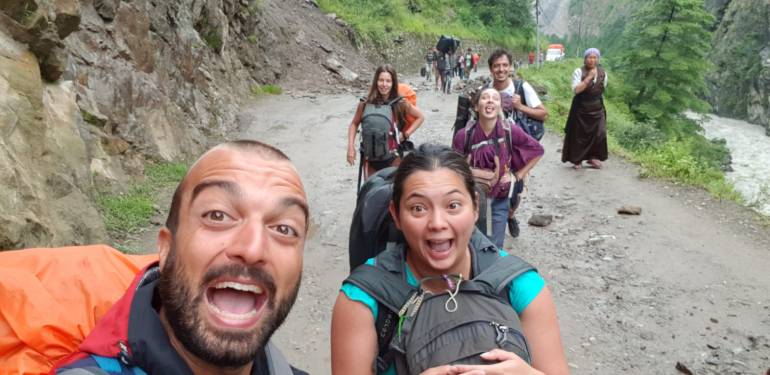
On our second day, after clambering over a fresh farewell landslide with our luggage in-hand and walking the last kilometer or so of Nepal, we endured a few hours of waiting and fairly invasive processing at the border. (They went through all the photos on my phone and iPad, and made me delete possibly the most benign, blurry image of the Dalai Lama ever — or rather an image that *contained* an image of the Dalai Lama in the background.) We then transferred to a nice, comfy, thoroughly surveilled van and some landslide-free, thoroughly paved Chinese roads for the next thousand or so miles.
For the next week, we were crammed into said van for most of each day, herded from approved sightseeing location to approved sightseeing location, and fed a lot of garbled narratives about what we were seeing. It was not precisely as anyone had expected and was quite often frustrating. I really liked my group, though, which was a real blessing, and I think overall I was able to take the whole tour more in stride than most. For me, the trip was an interesting way to get from point A (Nepal) to point B (Beijing), rather than a bucket-list expedition during two precious weeks of holiday.
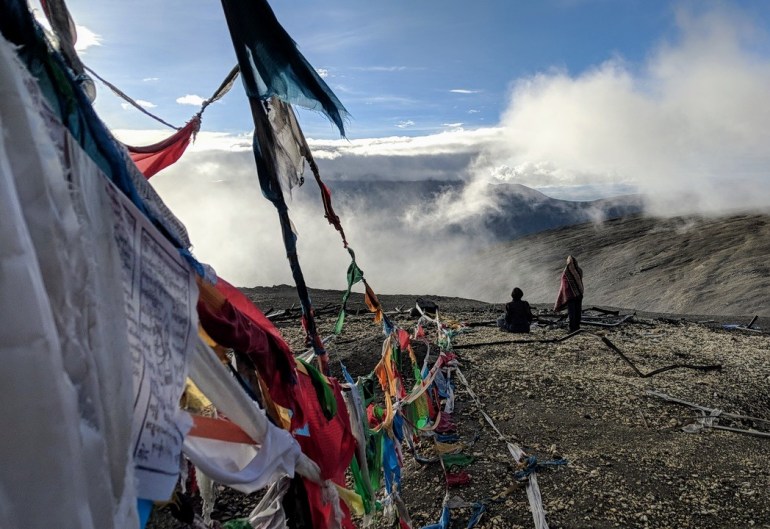
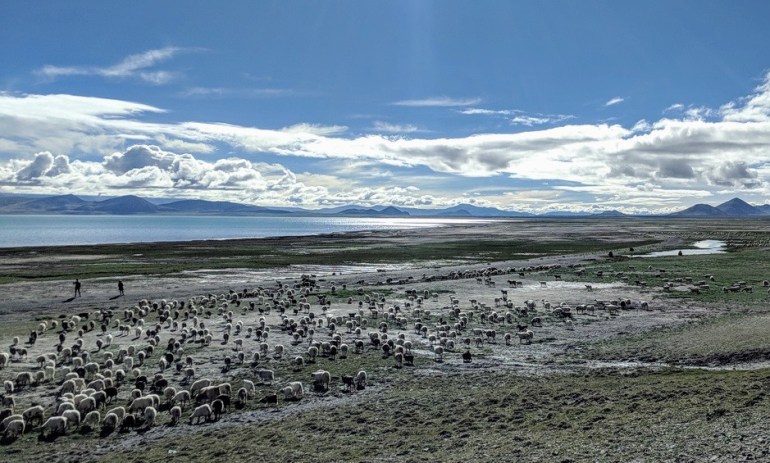
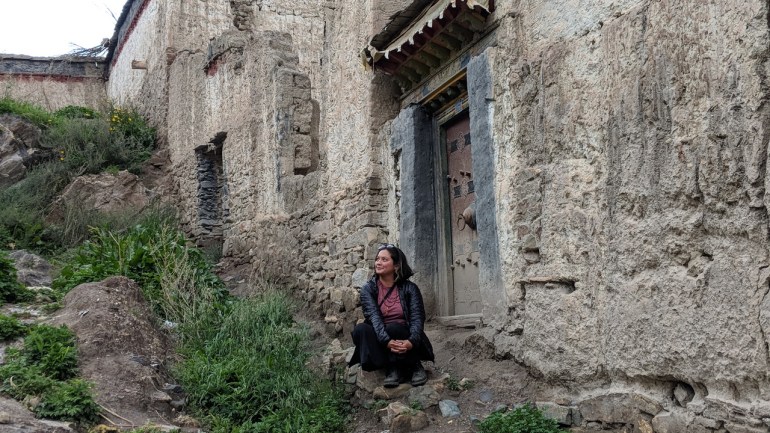
On the long road to Lhasa, we passed through tiny Tibetan villages that reminded me powerfully of Upper Mustang — white mud-brick topped with stockpiled firewood, black-rimmed windows, compound walls piled high with cow patties, little terraced fields of buckwheat and mustard — over 5,000 meter plus mountain passes plastered with prayer flags — which made everyone a bit weak and dizzy, medication or no, and at least one member of our party dangerously ill — and through craggy river valleys and broad plains filled with yaks and goats.
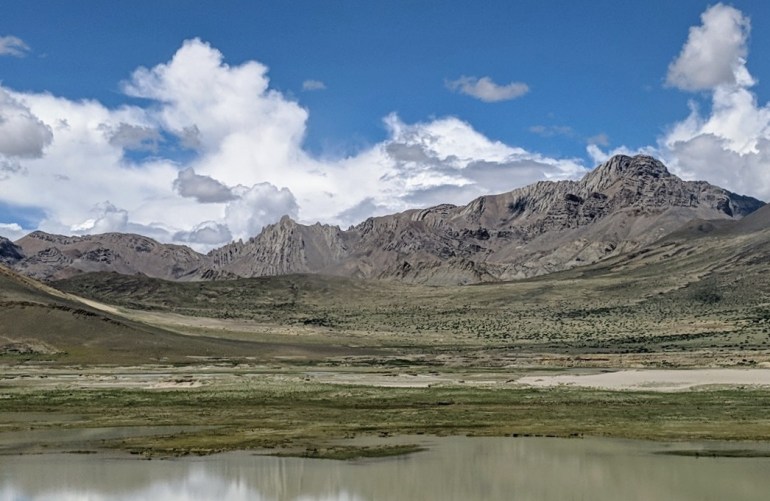
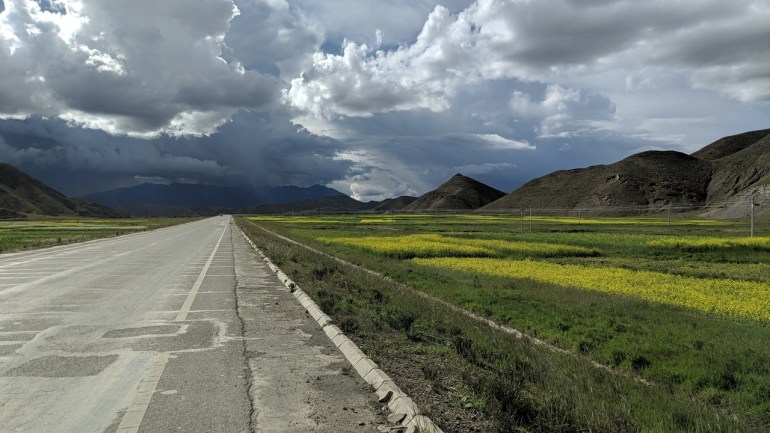
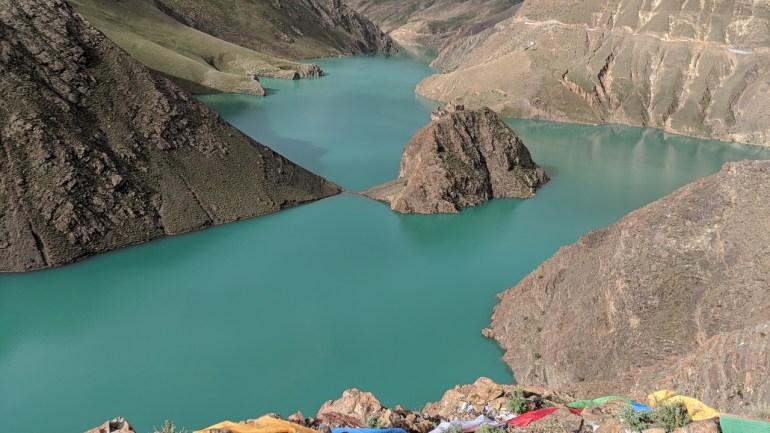
I also saw my first glacier, which I hadn’t at all expected. When it unfurled around a bend in the road — streaked blue and gray and white, the precise color of deep, bone cold and looking for all the world like something immutable and permanent — it took my breath away. We begged the guide to stop for awhile, and I couldn’t take my eyes off the thing. It was literally jaw-dropping.
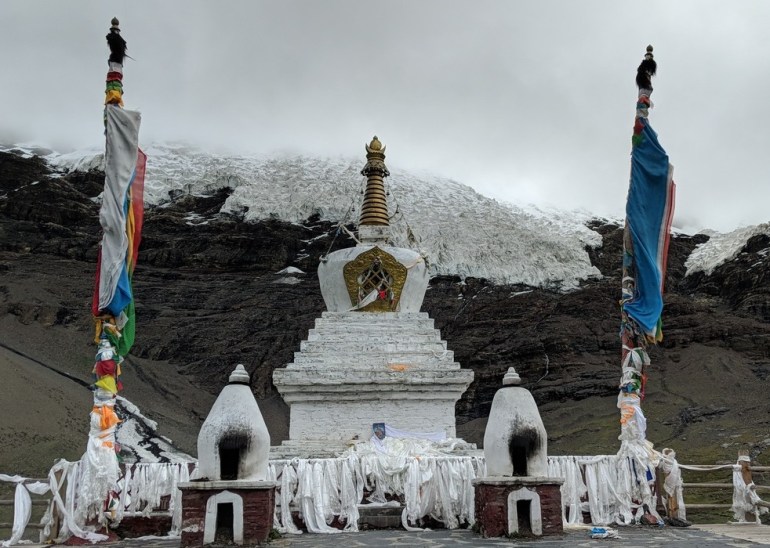
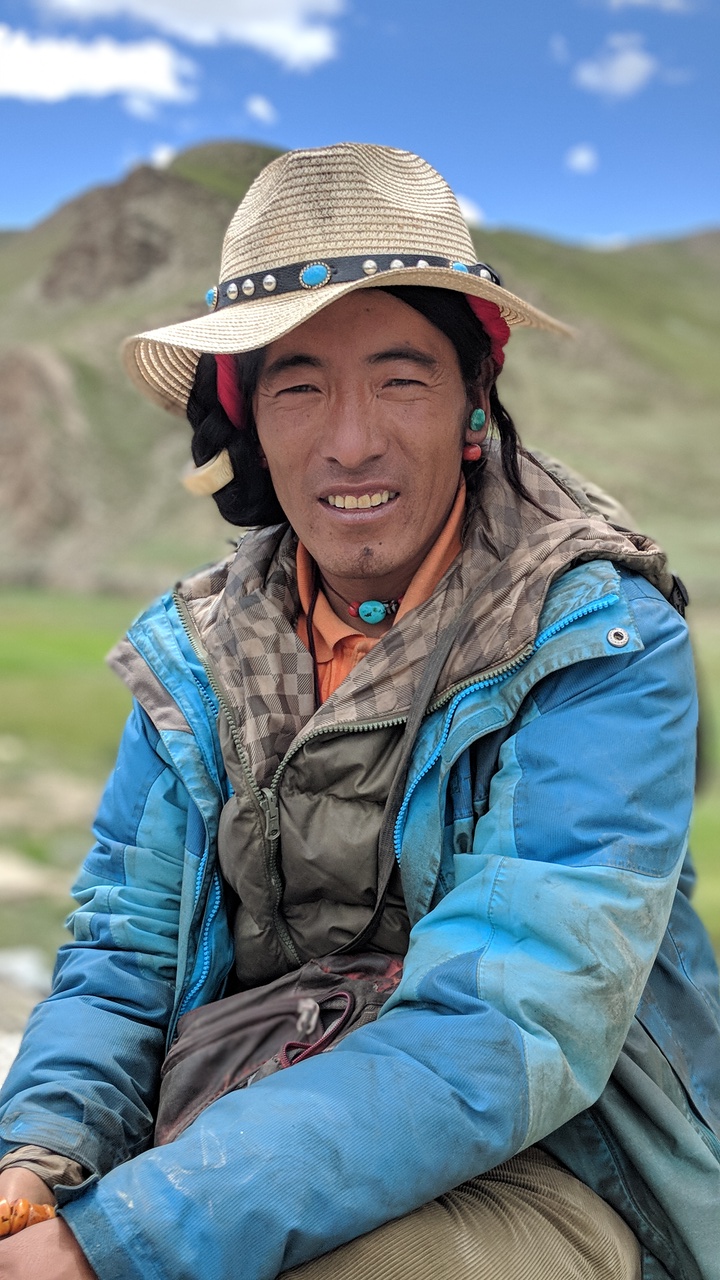
But we only spent the night or ate in big, developed towns, decidedly Chinese in appearance, concrete and bustling, and outfitted with the likes of Burger King. We mostly stopped at tourist-friendly photo-ops full of aggressive jewelry sellers and huge, sad-looking mastiffs you could take sad pictures with. Nearly all the other tourists were Chinese. All of the aggressive jewelry sellers and sad dog wranglers were Tibetan though; many looked like they’d chosen the tchotchke-hawking life not so long ago, still wearing the yak bone hair ornaments and broad hats of traditional herders. (Tibetan herders look strikingly like American cowboys, with whom, I suppose, they have more than a little in common.)
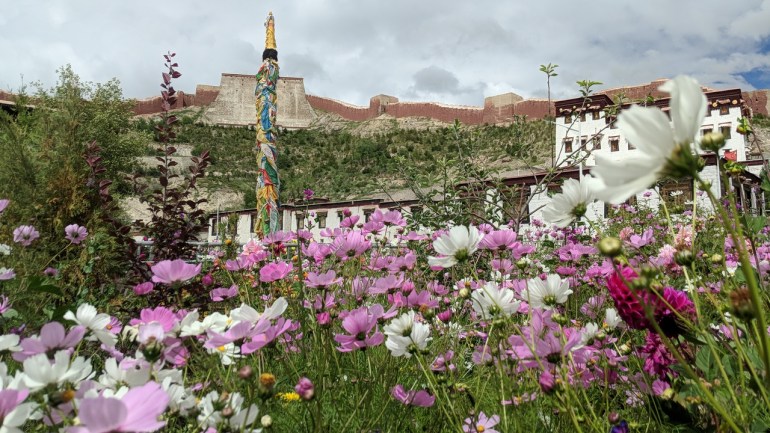
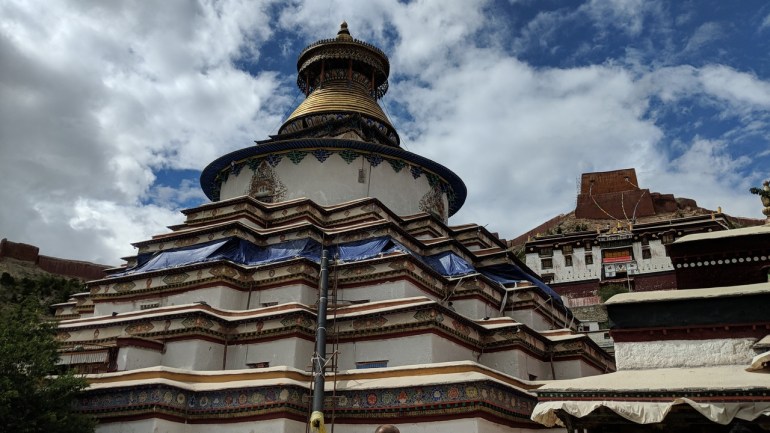
A couple of our stops were at some of the country’s remaining 10 or so monasteries or gompas, where we’d take in the striking, complex artistry on display and try to parse some understanding of Tibetan Buddhism’s enormously complicated pantheon from the guide’s somewhat limited English and circuitous half-answers. I took to reading along on Wikipedia. (Thank god for VPNs and Google Fi.)
“This one is Chenrezig or Avalokitesvara. This one is Avalokitesvara with four arms, and this one is manifest with one thousand arms. This is White Tara, who is also Avalokitesvara, and this is Green Tara.”
According to Wikipedia: Avalokitesvara is the bodhisattva of compassion and one of the more prominent figures in Tibetan Buddhism, representing the unified compassion of all Buddhas. Tara is his female aspect, and in some accounts is said to be born of his tears. There are twenty one Taras, each with slightly different powers and emphases.
“This is an image of the 5th Dalai Lama, this is the 9th Dalai Lama, this is the 13th Dalai Lama…”
According to Wikipedia: The current Dalai Lama is the 14th, but his image is banned, as indeed I discovered at the border. He fled Tibet for India in 1959 in the midst of an uprising in Lhasa against Chinese rule. Although he is not denounced as spiritually illegitimate, the Chinese consider his government in exile, based in Dharamshala, to be a legally illegitimate open rebellion. The guide could talk about the current Dalai Lama only superficially.
“This is the 8th Panchen Lama, the 9th Panchen Lama, the 10th Panchen Lama, and this little boy here is the 11th Panchen Lama. As an incarnation of Amitabha, he’s actually in some ways more important than the Dalai Lama…”
According to Wikipedia: The identity of the current, 11th Panchen Lama is disputed. The Dalai Lama originally recognized one boy as the reincarnated Lama, as is traditional, but that child disappeared shortly thereafter along with his family. He is presumed kidnapped. Meanwhile, the Chinese government chose a second child and declared him to be the 11th Panchen Lama, bringing him to Beijing to be educated and causing his picture to be displayed in Tibet’s gompas. Tibetans outside of Tibet sometimes call him the “Fake” Panchen.
“This monastery is the most important of Tibet’s 10 remaining monasteries. There used to be 6,000 monasteries, but they were destroyed.”
“When were they destroyed? Why?”
“There was a Cultural Revolution in Tibet. They were destroyed in the Cultural Revolution.”
According to Wikipedia: The Cultural Revolution spread from China proper to occupied Tibet in 1966. It did, in fact, include the destruction of many temples and cultural and religious artifacts, as well as the violent persecution and killing of “reactionaries.” However, by then most of the country’s 6,000 monasteries — which served as places of worship, social and governmental hubs, virtually the entirety of the educational system, and de facto storehouses of wealth — were already destroyed. Although this is disputed, the widespread opinion outside Tibet/China is that much of the destruction was carried out by the government starting in 1959.
We also passed through many of what I can only describe as China’s aspirational ghost towns: fully outfitted tracts of hundreds or thousands of homes, newly-built and utterly empty. Often they abutted existing towns, with modest existing Tibetan populations. Their architecture sometimes mimicked the Tibetan style, but with modern materials. I assume these towns were waiting for the planned migration of Han Chinese into Tibet. This is well underway of course, but so far still seems to be mostly concentrated in the larger towns, and in the few smallish modern cities like Lhasa and Shigatse.
Our tour ended with three nights in Lhasa, and because I’d found the larger towns and cities weirdly sterile and fairly off-putting, I was nervous about how I’d like it. In the end, though, I liked it a lot.
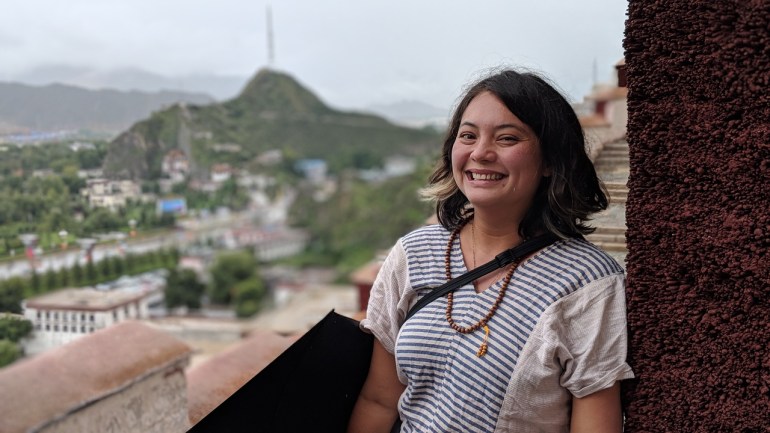
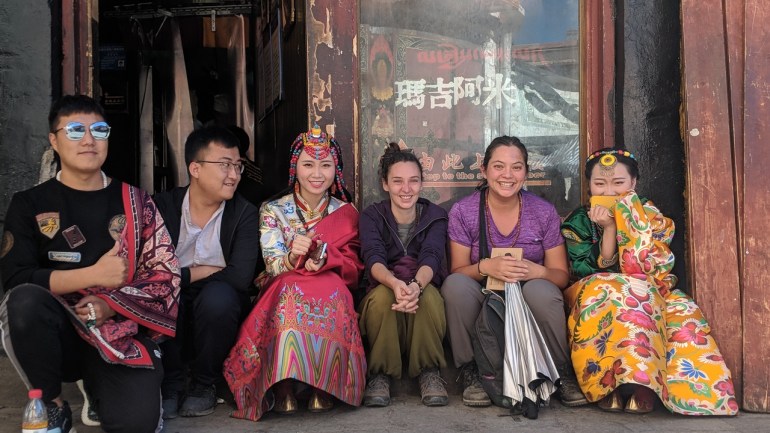
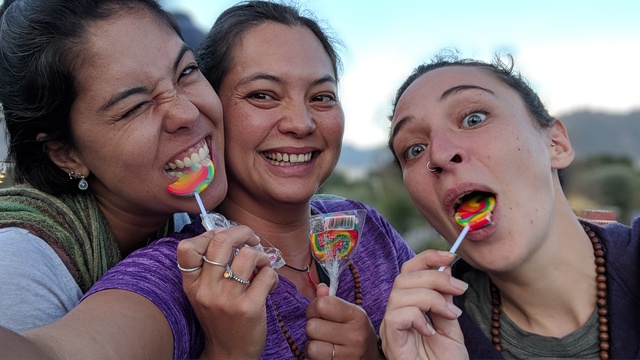
Lhasa is in many ways a very Chinese city in appearance and demeanor. It’s covered in cops and really kind of extra about security checks (one to get into the city, one to get into the old town, four to get into the train station, etc). It sprawls along its river, and its new condo developments are beginning to lap against the dusty surrounding hills. The roads are buzzing with dirty trucks and clean electric scooters. But with all that, it’s still a Chinese city that’s wrapped around a Tibetan heart — one that is still largely intact.
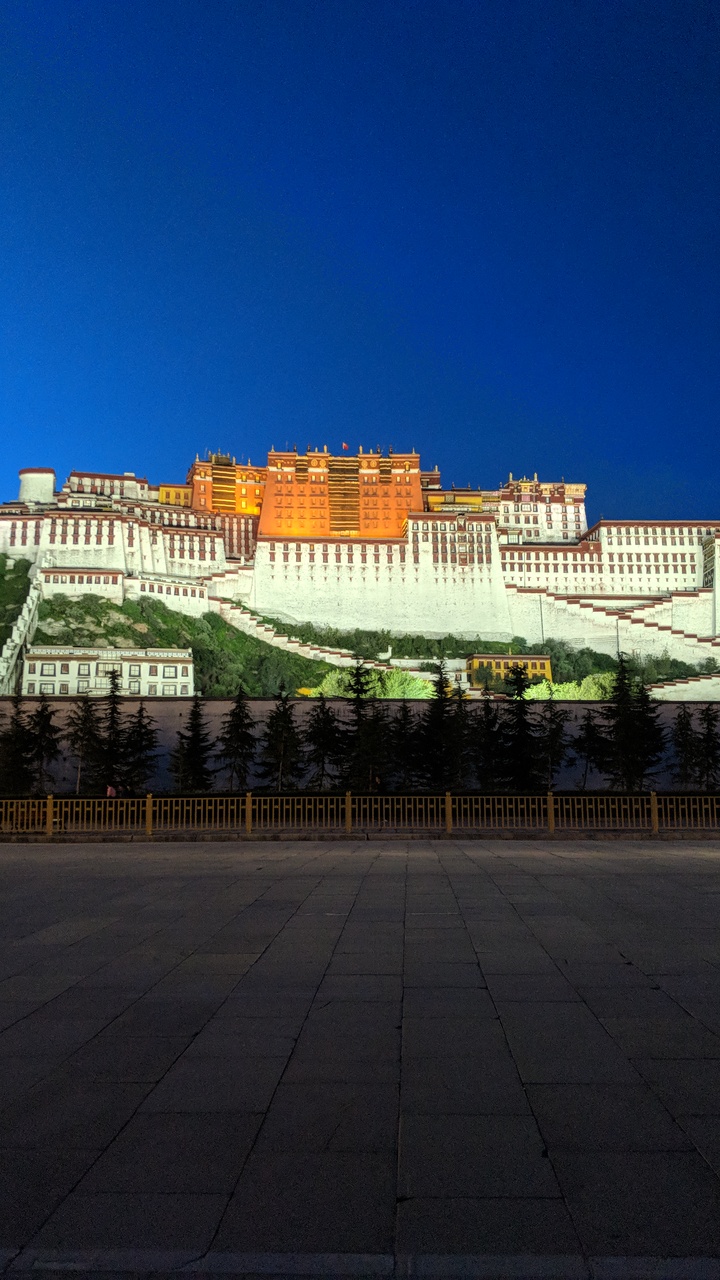
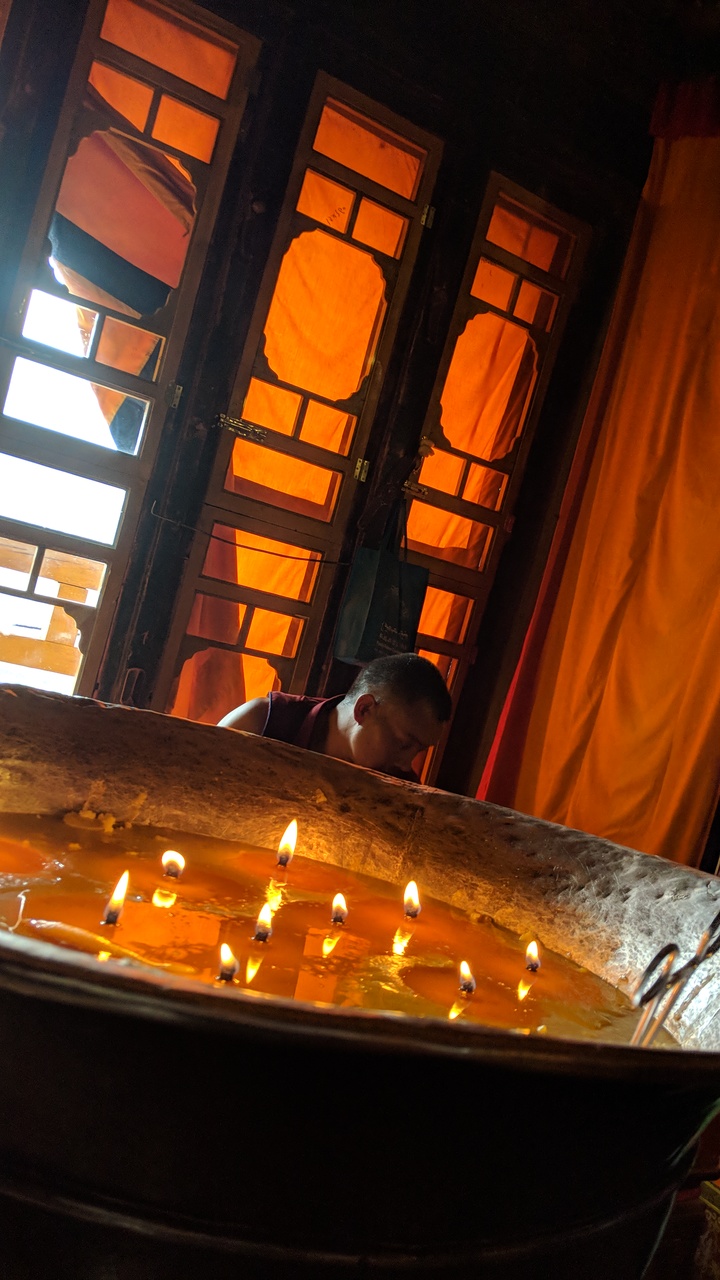
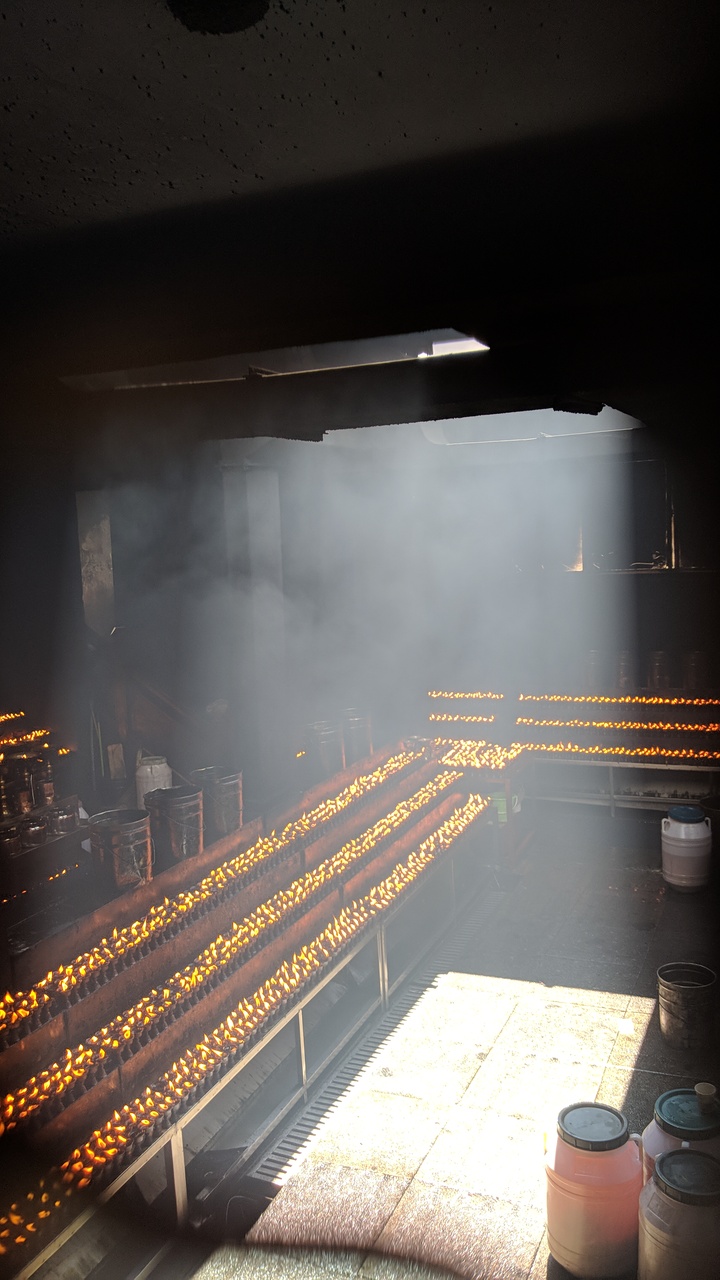
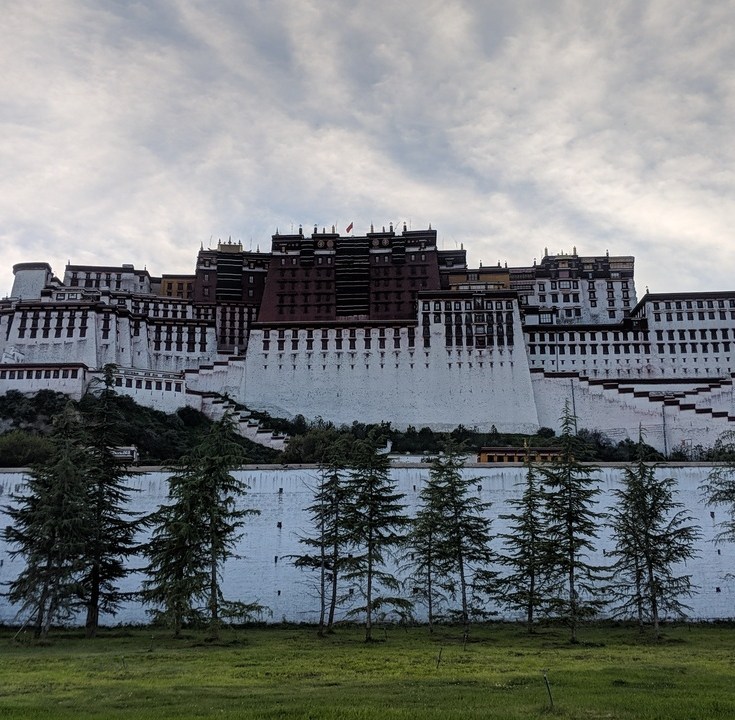
Old Lhasa’s twin centers of gravity are Potala Palace — the Dalai Lama’s traditional residence and former seat of power, iconic and always-visible on its central hill — and Jokhang Temple a couple of kilometers away, which is considered the most important temple in Tibet and forms the heart of the old-town’s warren of low-rise buildings and dense pedestrian lanes.
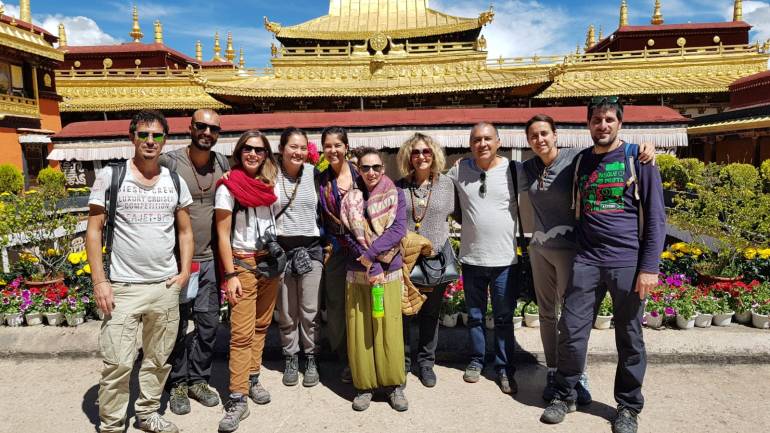
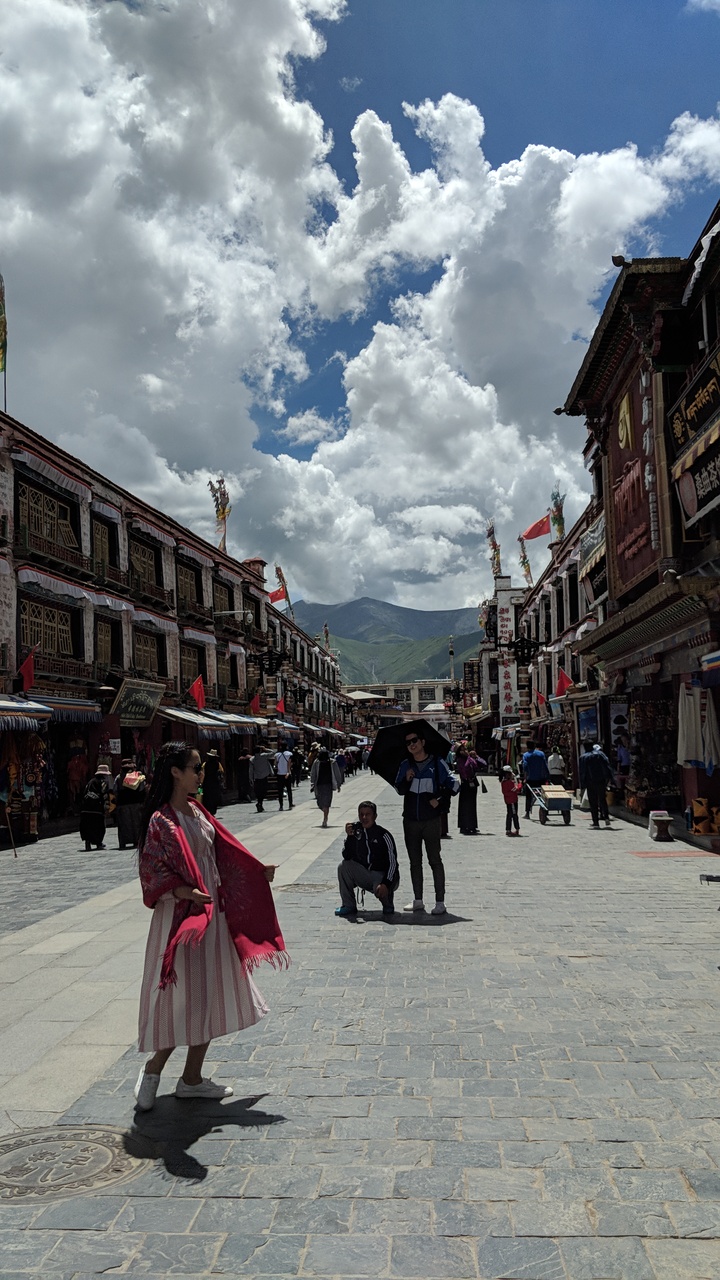
It was in Lhasa that it became clear to me just how alive Tibetan culture, especially religion, still is for people, despite the parts that Beijing has tried to excise. All day every day, in continuous moving rivers, hundreds of Tibetans — most, but not all, on the older side — walk clockwise around the palace and around Jokhang temple. Walking clockwise around a holy site or object is said to generate positive karma. Some of the walkers are local and do it in their free time, with as few as three circuits, but many have made the pilgrimage from far away and do hundreds of circuits at a time. Some do a full prostration every three steps.
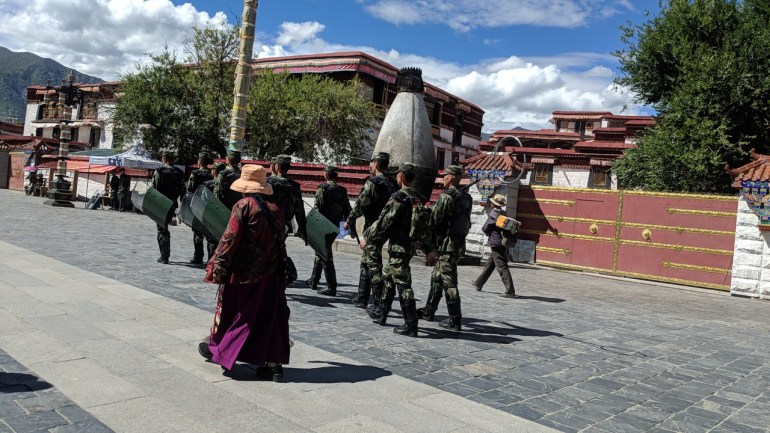
Unlike the Chinese, all Tibetans are religious, our guide told me. (Once we were out of the van and I’d gotten him to warm up a bit, he seemed willing to make some mild, resentful asides about China and Chinese rule.) “All?” I pressed, “Surely it can’t be all.” He insisted that it was, and though I’m sure this is an exaggeration and a simplification, I certainly came away from Lhasa with the impression that Tibet is the single most devout place I’ve been to.
Here’s another level of mixed-feelings, though: As someone who’s is interested in Buddhism more broadly, I have a sort of fraught relationship with Tibetan Buddhism specifically. I respect its adherents’ right to practice whatever they damn well please, I find the sprawling cosmology fascinating, and honestly I think its trappings are drop-dead gorgeous — but at the same time, I find some of its doctrines and practices distinctly unsettling. (See also my previous blog post on my stay in a Tibetan monastery in Nepal.)
I find the absolute authority wielded by Tibetan gurus unappealing, even dangerous, and I think the latter judgment is rather borne out by the many cases of sexual abuse that have recently roiled Western convert communities. Likewise, I find the way that Tibetan lamas once doubled as both religious and de facto state leaders troubling, not to mention the way that monasteries — though only debatably “feudal,” as Beijing claims — once operated as the dominant class in what was effectively a rigid caste system. While I don’t want to suggest that any of this is remotely reason to deny a people self-determination — and lord knows China’s surveillance state authoritarianism is no kind of liberation — it is true that many Tibetans were in fact *unfree* even before China’s takeover, as hereditary corvée laborers for both the aristocratic class and the monasteries.
Both sides — Beijing and the Tibetan government in exile in Dharamshala — have been waging ideological war over this place for so long. As a non-expert outsider curious about Buddhism, history, and the world’s many forms of oppression, I’d somewhat hoped to get a bit closer to understanding this conflict during my time there… but I’m really just coming away with a lot of questions.
I guess highly structured state sanctioned group tours aren’t the best path toward illumination. I guess that’s by design.
China/Beijing addendum:
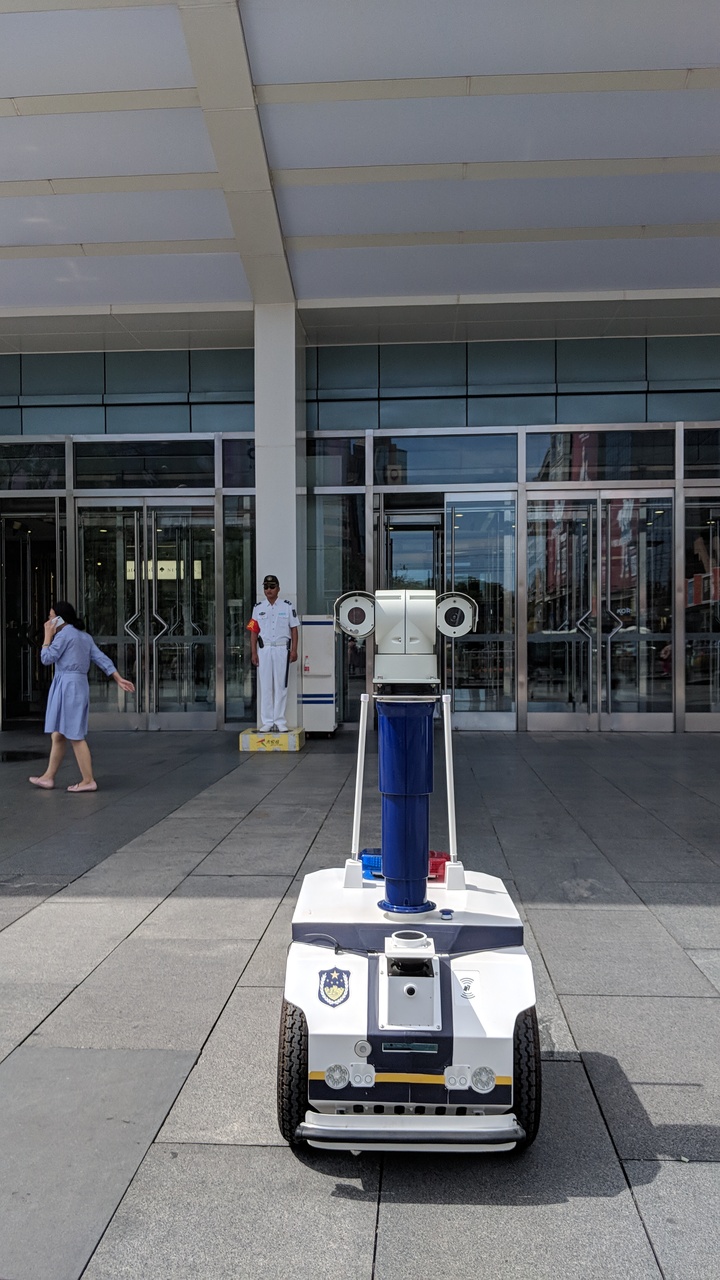
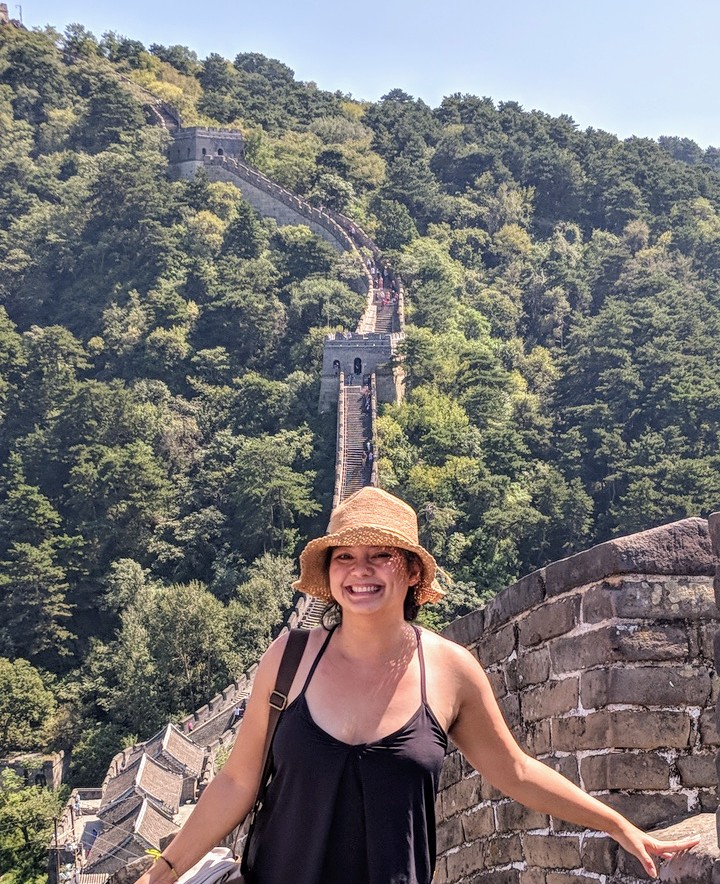
After my Tibet tour finished, I took a train from Lhasa to Beijing. I spent my time there marveling at the city’s cleanliness, dealing with my second bed bug infestation (previous observation re: cleanliness notwithstanding), eating lots of amazing food — side note: I basically went to Beijing just to eat jianbing, and I am not ashamed — and taking pictures of police robots. There were a lot of cops there. The Great Wall was quite fun. The Forbidden City sucked.
Fin.

Notes for travelers:
As noted, the road from Kathmandu to the Tibet border is both atrocious and beautiful. Supposedly the route to/through the crossing at Kodari is much shorter and easier, however when I went it had been closed due to landslides — surprise! — and we instead had to go the long way about through the Rasuwa Fort crossing.
I bought a budget tour package through Tibet International Travels & Tours, after walking around the Thamel neighborhood (in KTM) and checking out several outfits advertising similar. I could have saved myself the time, however, as it seems like all the Nepali companies are basically brokers that feed their customers into a single agency on the Tibet side. Several other people in my group had bought packages through some of the same agencies I’d looked at, for a bit more or a bit less, and received identical trips.
Tibet International was fine, not great. They could have planned ahead to mitigate the stuck-at-the-border-with-no-hotel situation, which seemed entirely predictable even to my non-professional eye, given Nepal’s roads. However, their Tibetan partner, Tibet Shambhala Adventure, was extremely terrible. I don’t honestly know what the alternatives look like or how to access them if you’re buying a budget package in KTM — but buyer beware. (See above for the many ways they fucked up for people in my group.)
These bundled group tours leave every Saturday, bright and early. Assuming I haven’t put you off the idea by now, you should plan on signing up for your tour at least a couple weeks in advance, as they will need to submit the permit application to the Chinese embassy at least 10 days in advance. (They will also need your original passport 5 or so days in advance, so plan ahead in terms of when/what you might need that for in Nepal.)
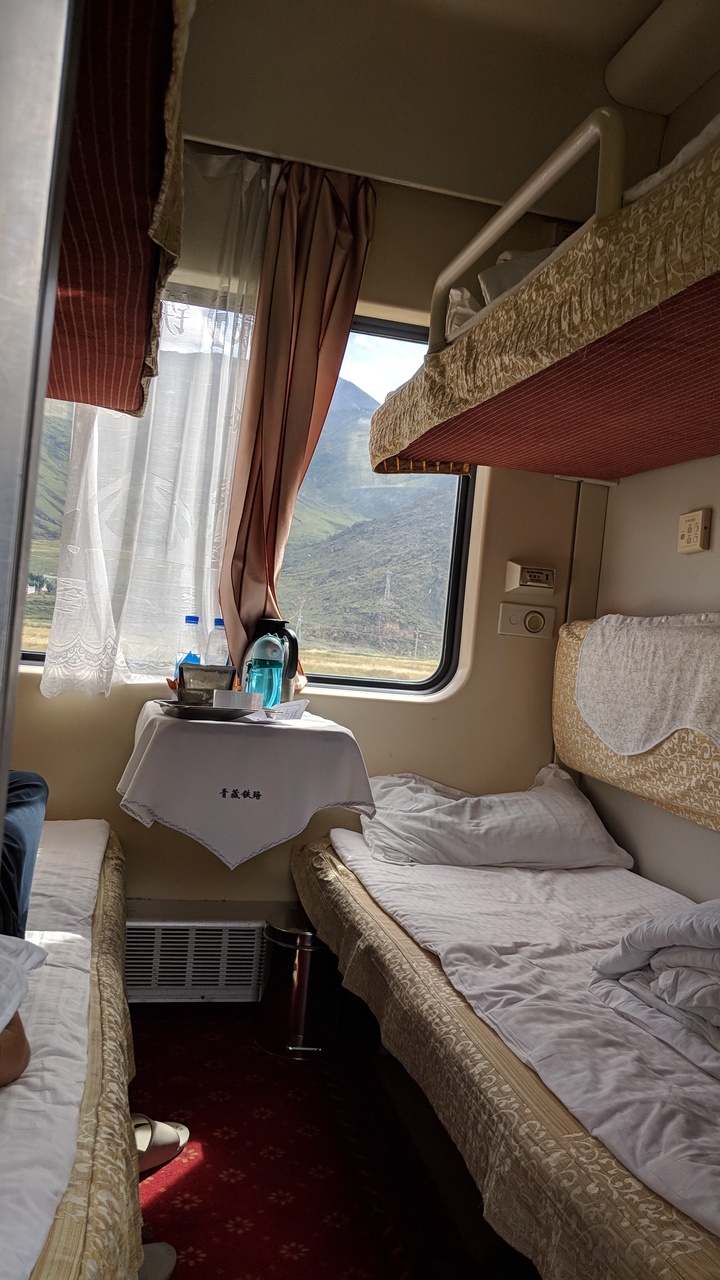
On the other end, I took a soft sleeper from Lhasa to Beijing, which took 40 hours, give or take. The easiest way to purchase train tickets is through your existing tour outfit (although you might wanna hassle them a bit re: assurances for when your actual ticket will be delivered into your actual hands — I had to harass my poor guide every day for updates, which were not forthcoming, and then secured my ticket at 9pm the night before departure). Alternately, you can buy them in Lhasa at the station or through a local agent. They do sell out, especially during high season, so this can be risky and nerve-wracking. Once our tour was over, I basically had 48 hours to get out of Tibet. You can also take a less popular train to Xining, and then book onward travel elsewhere in China at your leisure. (The Tibet permit effectively acts as a Chinese visa for 30 days.)
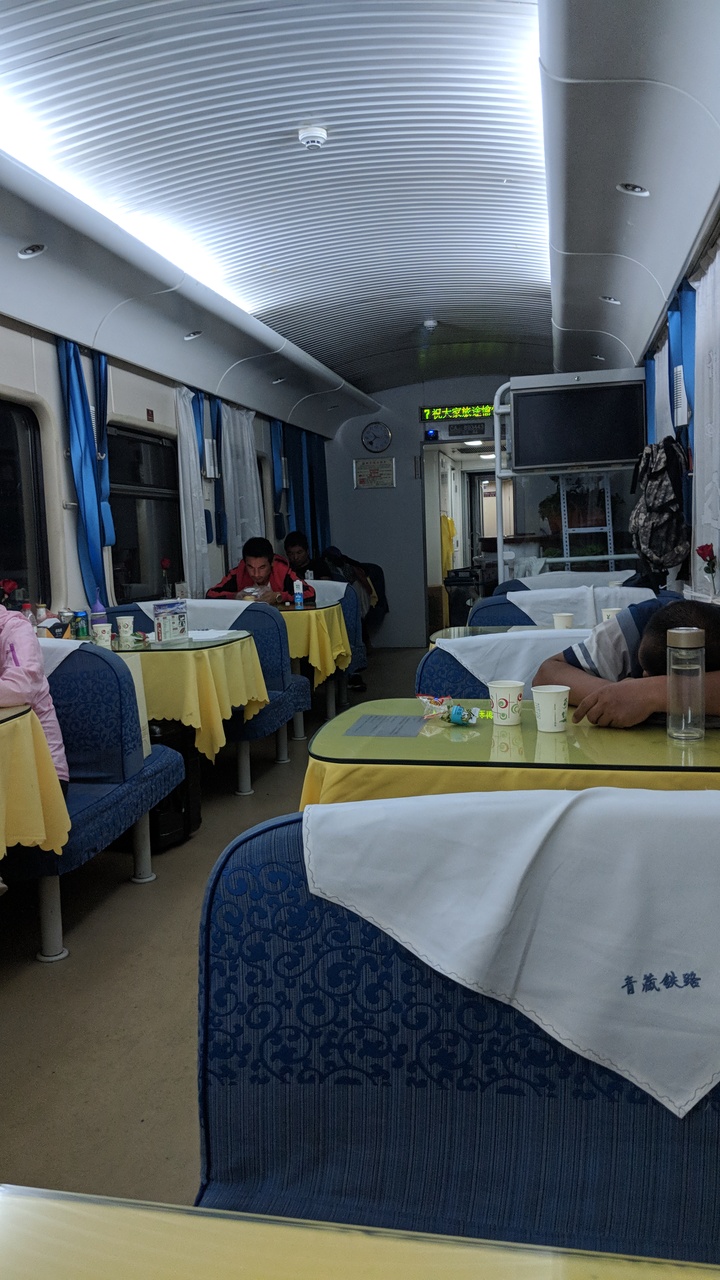
Soft sleeper cars are quite comfy, and they even include piped-in oxygen if you’re worried about the altitude. (This is the highest train line in the world and tops 5K meters at some points.) Bathrooms were fairly gross per the Chinese norm, but not the worst. There is a dining car and food sold in the sleeping cars, but English speakers, menus, etc. should not be expected.
Important overall note: Download at least a couple of reputable VPNs before you go. No single VPN can be universally relied on, as many of them are no longer able to maintain stable connections in China (this is basically an ongoing arms race). VPNs in general are somewhat notorious for being sketchy and riddled with malware, and especially if you’re downloading a free one, know that it’s probably sucking up *lots* of your data in return. Check out EFF’s guide to picking a VPN here.
 Grounded