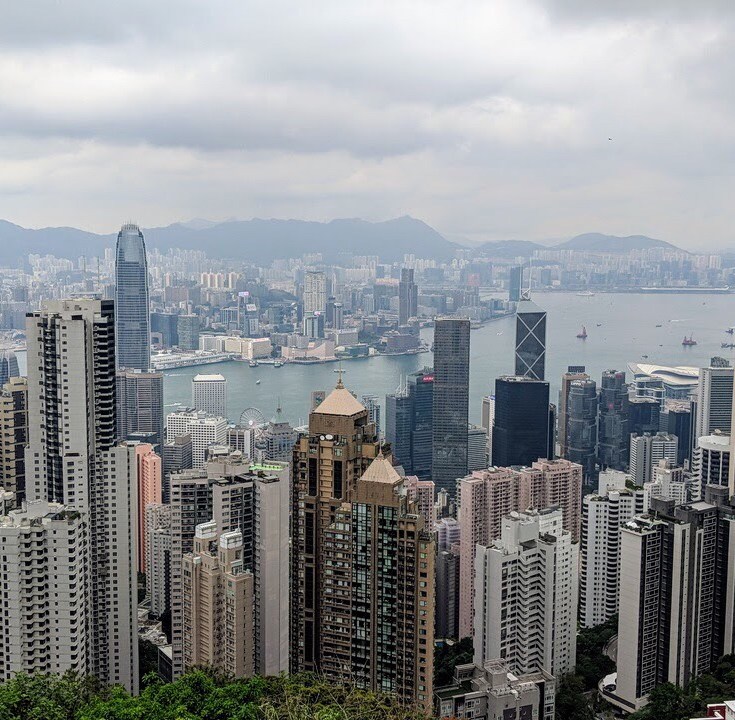

As my ship made a dogleg out of the greater Pearl River Delta and joined the slow parade of similar boats moving past the outer reaches of Hong Kong island toward the port, I stood on deck to take it all in. Almost immediately, I was overwhelmed by the sheer spectacle of the place. Hong Kong is a city of superlatives: the steepest hills, the fanciest stores, the best subway, the biggest apartment buildings. Even on the far side of the island, away from downtown, my mind was quickly boggled trying to estimate how many people must live in each massive complex.
I’d been told by the captain that there would be hawks on the way in, which come to hunt seagulls, swallows, and pigeons amongst the shipping containers. “They should be coming now,” he said as we drew even with the main island, and a minute later I saw one glide across the bow. (I looked it up immediately: they’re actually black kites rather than hawks.)
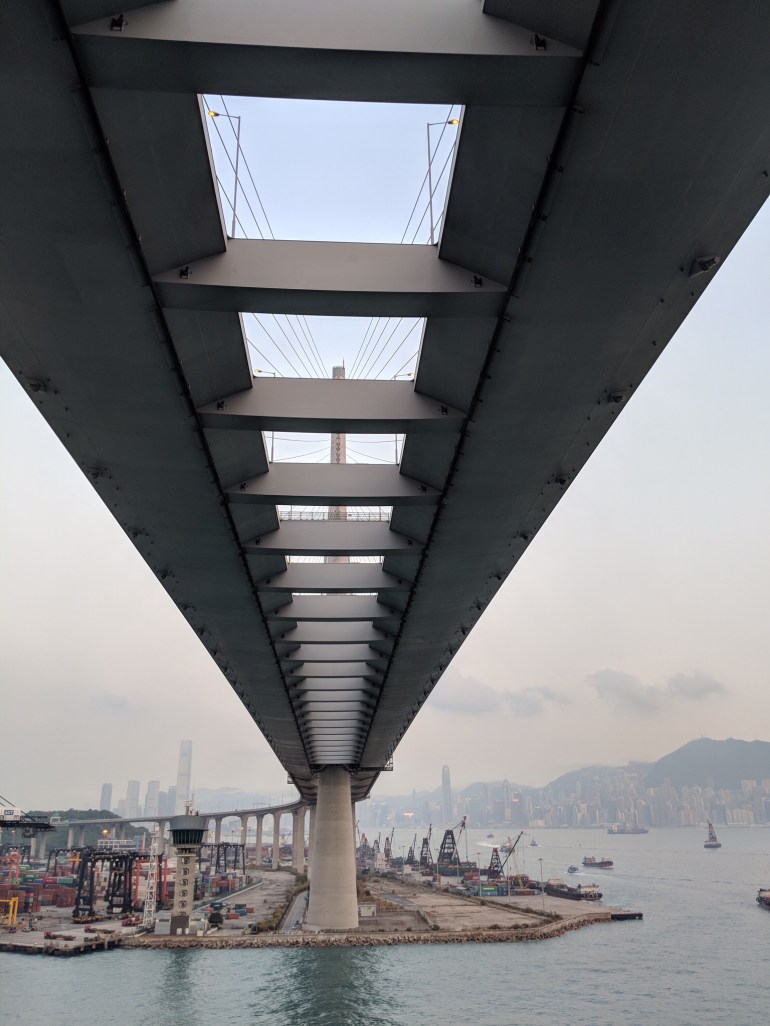
We passed the city’s nexus, the channel separating HK island and Kowloon, and then under an impressive suspension bridge to reach our assigned dock, one of the closest to the city proper in the massive port area straddling the channel between Kowloon and Tsing Yi. As the ship’s personnel went through the long process of getting us properly docked and cleared, I spent the twilight hours looking out my familiar bridge windows at a suddenly tall, suddenly riotous, suddenly and intensely *layered* vista — looming shipping cranes on top of arcing highway overpasses on top of glittering skyscrapers on top of incongruous green hills.
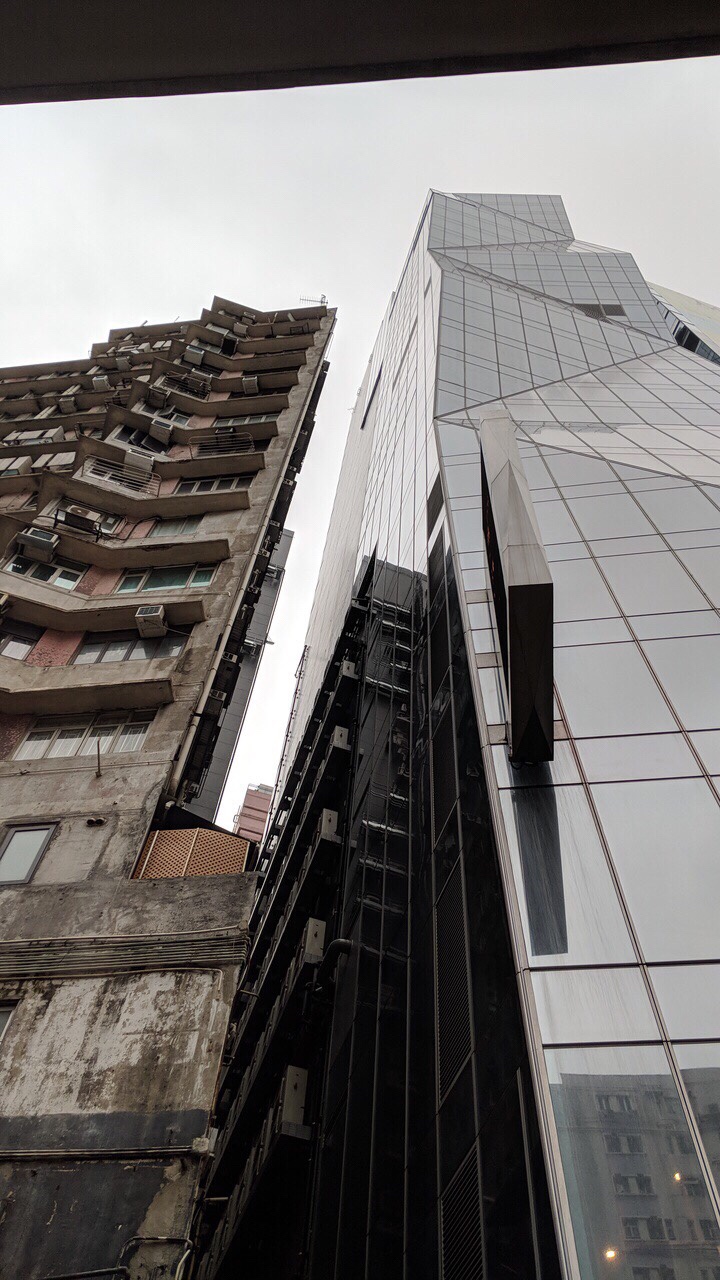
This is a city where you can visit a still-quite-utilized temple dedicated to the Taoist gods of war and literature, eat at a dingy cafeteria in the middle of a “wet market” teeming with butchers and vegetable sellers, surround yourself with greenery, and visit a Patagonia retail store — all within the course of an hour. In its huge-ness, in its many wet markets, in its gray economy flowing out onto the sidewalk, in its patched and ubiquitously tiled buildings, in its skyscrapers adorned with colorful, Blade Runner-esque advertisements: this is Asia, only more so. In a wildly surging region, this is the flagship city (or at least *a* flagship).
I spent a week in Hong Kong after disembarking from the Temasek, applying and then waiting for my Vietnamese visa application to go through. It’s also an extremely expensive city, so I didn’t want to stay too much longer than I had to. (I ended up staying a couple days longer than strictly necessary, since my e-visa was processed quicker than expected.)
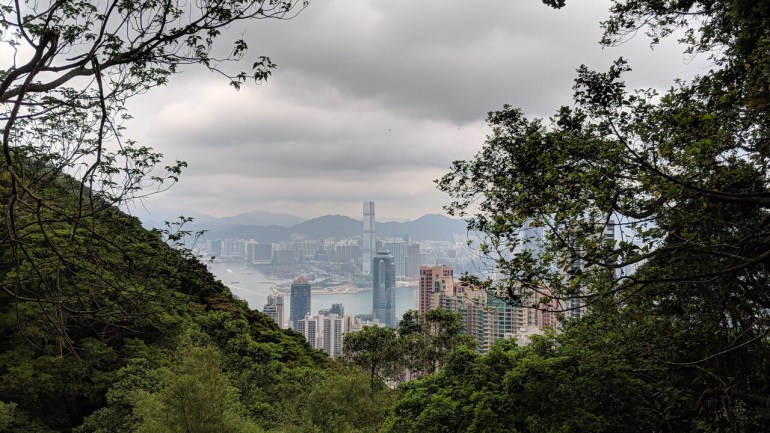
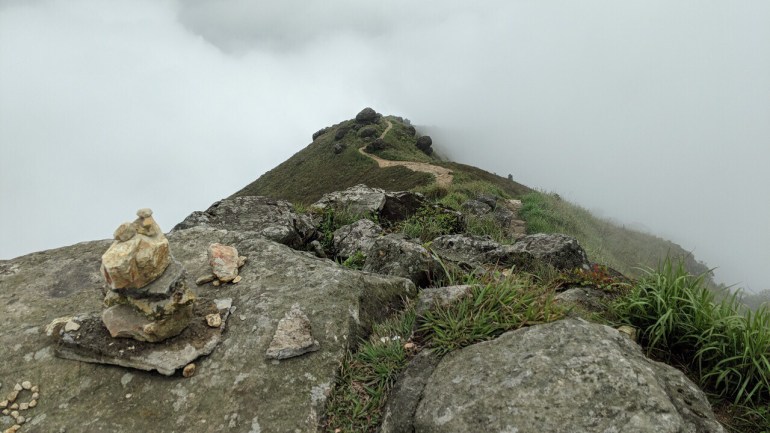
My overwhelm subsided somewhat after the first day or two, and I felt fairly confident navigating the city (in no small part thanks to the incredible transit system). Probably my favorite excursion was to Lantau Island. I took two ferries & a bus to get there, and then hiked up and over Lantau peak to the Big Buddha. It was a short-ish but punishing climb, and totally exhilarating. I was just over an hour from the center of Hong Kong, but utterly alone on a ridge trail shrouded in fog and lit up by birdsong. The heat and the tropical hills flora reminded me strongly of hiking in Hawaii growing up. When I reached the great bronze seated Buddha at Po Lin monastery, I looked up at him and wondered if I should feel something. My recent interest in and exposure to the Buddha’s teachings have been profound for me, but I haven’t ever felt a sense of reverence or worship for the Buddha as a figure. Now, I was filled with a general sense of reverence from my hike… but still nothing for the statue. Oh well.
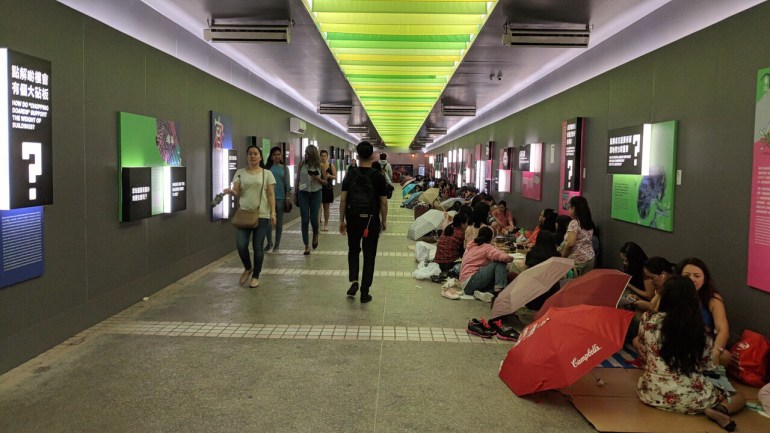
On Sunday, while doing a rather meandering circuit of the Central and Soho neighborhoods, I found myself repeatedly surrounded by Filipino women. The streets, parks, and passageways were full of them. An urban planning nerd friend clued me in to the phenomenon by text: These women are amongst the 370,000 live-in domestic workers who keep HK’s upper class homes running smoothly. About half are Filipino, and the other half are Indonesian. They get one day off per week, and since (by law) most of them don’t have their own homes, they take to the streets. As I drew closer to the Central MRT station, they lined every public walkway with makeshift temporary encampments: playing cards, playing music, eating, celebrating birthdays, napping, doing handicrafts, and, in one case I saw, holding an impromptu church service. It was an extraordinary claiming and repurposing of public space, as well as a strikingly visible reminder that this city is a deeply stratified place. Layers on top of layers.
HK to Nanning by train
On a Thursday morning, Vietnamese visa in hand, I set out for Hanoi via Guangzhou and Nanning.
The train to Guangzhou was impressive, which makes sense for such a high traffic route between a place like HK and all the business to be done on the mainland. It had 12 foot ceilings and beautiful tea with whole jasmine flowers afloat in it. I guess the Chinese don’t fuck around with bad tea, even on a train.
As we passed into China proper, the visibility dropped almost immediately, and when I disembarked in Guangzhou I realized that the English proficiency of the population had dropped off too. Everything felt a lot less scrubbed, shiny, and intelligible. I’d been spoiled.
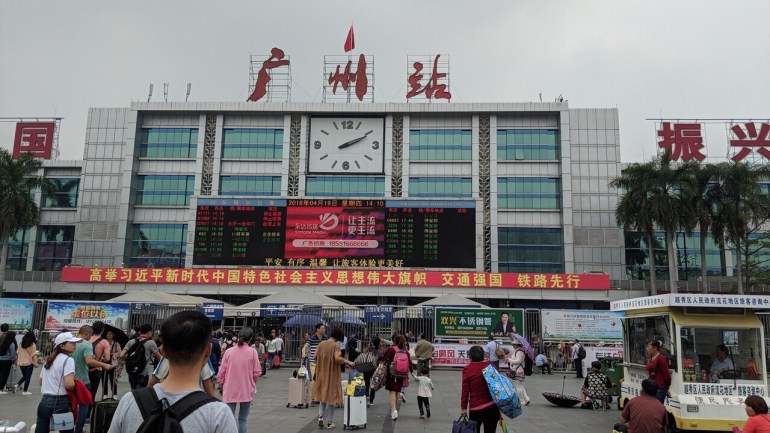
Somehow — largely thanks to a little piece of paper with such useful phrases as “Guangzhou central train station” and “train to Nanning” written out on it — I managed to get myself across town to the other train station, into the proper entrance of said train station, and at the correct departure gate for my next leg. There wasn’t a single sign in English, but thank god for Arabic numerals.
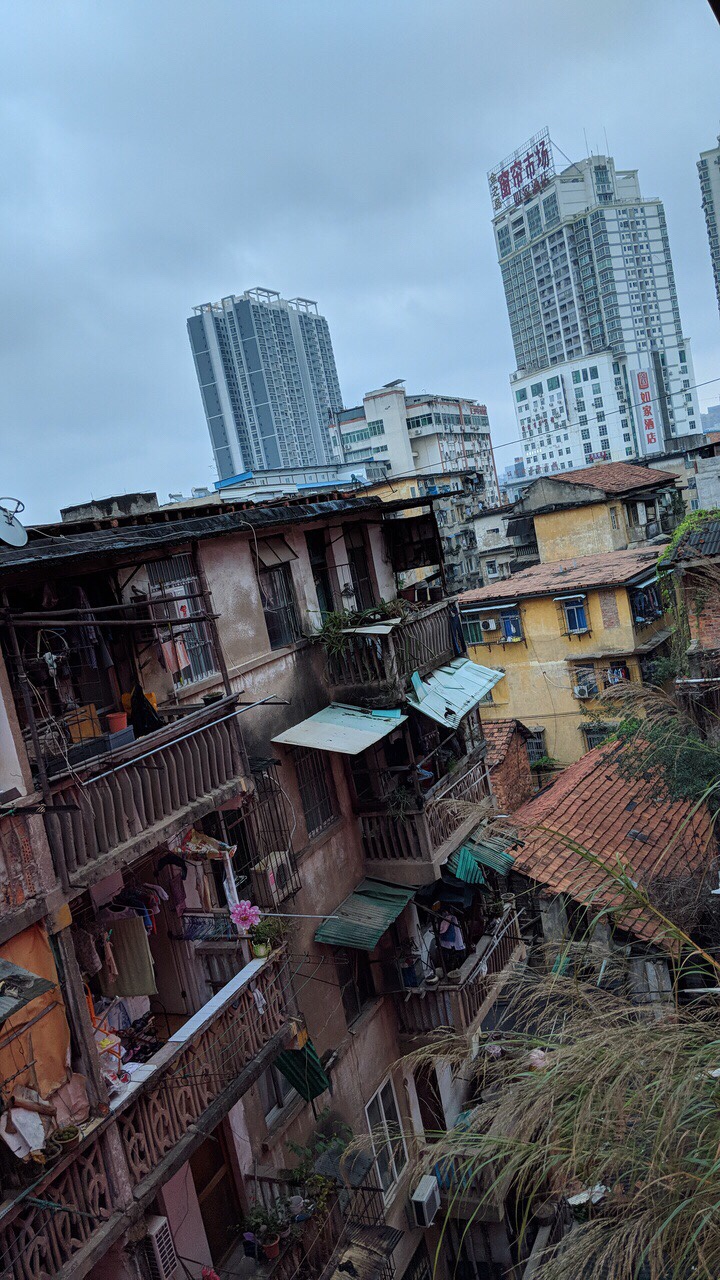
The train from Guangzhou to Nanning was a sleeper, but considerably less nice. It rattled and banged. All its fabric was frayed, and all its metal edges were rusted. I shared my cabin with a seemingly middle class couple who smiled a lot but didn’t speak a word of English. I watched southeastern China go by: dense tenements cheek by jowl with patches of lush agriculture, glimpsed intersections clogged with motorbikes, slow-moving streams clogged with debris, gray abandoned-looking cement plants, an orderly but decaying row of brick shacks running alongside the train tracks, neat kitchen gardens in the no-man’s land between track and buildings, one beautiful and ancient looking temple in run down corner of an outlying district. I had some oily stir fried chicken and rice in the dining car, where the staff seemed bemused by my desire to eat dinner, and the guy in the booth next door was visibly on his second full bottle of liquor. I slept fitfully.
It was still dark out when we pulled into Nanning. My cabin mates confirmed that, yes, this was Nanning and yes I should get off the train. They were going too. I spilled out after them with my big backpack reattached, then basically wandered out of the train station into the darkness. Outside there was a chorus of pre-dawn crickets and a crowd of early-bird food and ride vendors. I walked past them in the direction Google maps told me was the bus station, hoping I might run into a coffee shop on the way. (Ha! China is a tea culture, Allyse, connect the dots.)
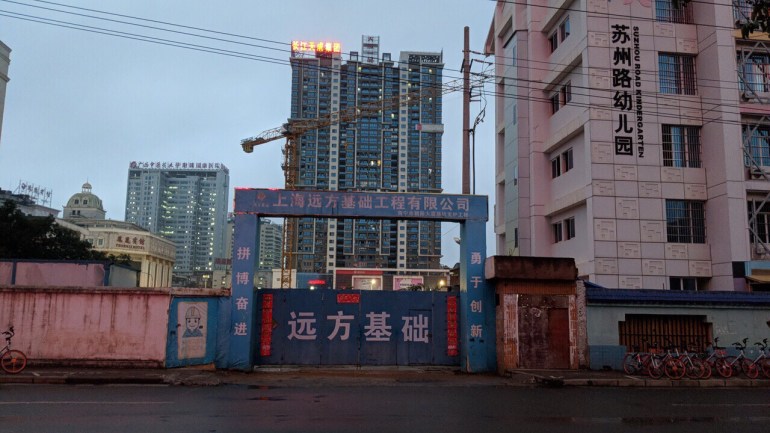
I wandered through the streets for about 30 minutes, watching the light come up and the shops start to open. No coffee. No English signage. Lots of construction and road work that wasn’t on g-maps radar. I found the bus station somewhat miraculously, and it was open — but the woman behind the counter looked flustered and gestured for me to wait. With no sign of a bathroom, no prospect of coffee, and no idea how long I was expected to sit there, I made a flash decision to spend the night in Nanning and started looking up hostels. No hurry, after all — it’d be nice to shower, caffeinate, and then give this whole bus ticket buying project a solid 24 hours.
Nanning to Hanoi by bus
There is, in fact, a sleeper train that runs from Nanning to Hanoi. I hear it’s nice. I, however, needed to take a bus, because of my first real overland travel logistical hurdle: I had an e-visa for Vietnam (visas on arrival can only be had at airports), and — as I thankfully discovered ahead of time by scouring the forums — they don’t accept those on the train. Evidently they’re known to actually make you get off the train in the middle of the night and sleep in the station until the landport 5km away opens up. That sounded unpleasant, so it was the bus for me, and I hadn’t been able to suss a clear, reliable way to buy tickets online ahead of time.
Nanning is not a city of superlatives. There’s not much there that’s particularly scenic, and as a result it’s not a town well equipped with a large selection of tourist-friendly amenities. There are a small handful of hostels though, and one looked to be just a couple blocks away. When I found it, however, no one was at the front desk. There was a young woman sleeping on a bench and another sleeping with her head down on a table. The latter gestured for me to wait and then went back to sleep.
Eventually a friendly Canadian from Montreal emerged with a large armful of clothes and started chaotically packing a large bag while loudly (for 7am) telling me about how he’d fallen in love with Hanoi and was going back that morning on one of the several buses. He also — mercy of mercies! — gave me a packet of instant Vietnamese coffee he’d brought with him into China, which was excellent. The Vietnamese don’t fuck around with bad coffee.
Since there was no one to tell me not to, I decided to have a shower too. At that point — clean, caffeinated, and better informed — I started to feel more like a functional human, and decided to try my luck again at the bus station. I was able to get on an 8:50 bus with the help of Google translate, and happily left Nanning behind without spending a night. I guess technically I stole that shower from the hostel.
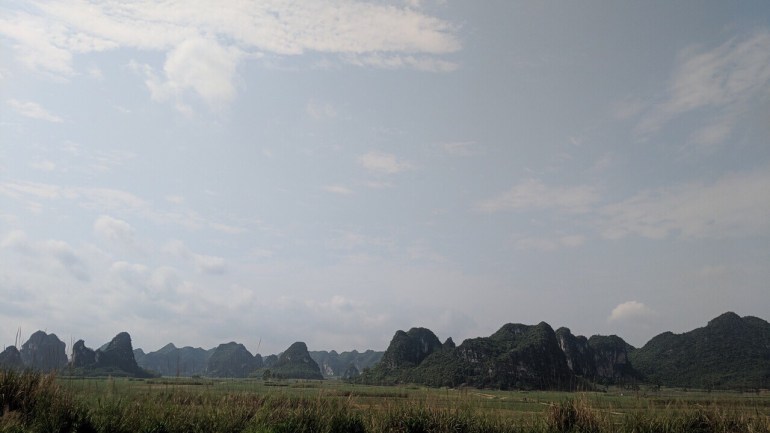
The ride to the border was comfortable and beautiful — karst crags, scraggly fields, adequate restroom breaks. I got through immigration without incident, mostly by shuffling along behind my fellow passengers. A mere 6 hours after throwing up my hands and deciding to spend the night in Nanning, I was in Vietnam! 4 hours after that, I was in Hanoi, and falling in love with it a bit myself.
The total trip from HK to Hanoi took me about 30 hours total. There’s a funny tendency when actively traveling — that is, while in transit, usually on an airplane or in airports, but on and in other things too — where you go into a sort of suspension. The focus is on the destination, on keeping track of your stuff and your next-step logistics, and on getting comfy while basically waiting it out. I kept having to remind myself as I bounced along in the back of a van watching Northern Vietnam’s rural landscape unspool: I’m not on my way to start this adventure. I’m in it. I suspect that’s going to become a bit of a mantra for me.
Notes for travelers*:
If you’re going the e-visa route, you will need to catch a train to Nanning and then a bus from there, rather than a train the whole way. They don’t take the e-visa on the train from Nanning to Hanoi.
I bought my train tickets to Nanning at the Wang Chai branch of the China Travel Service. There seems to be a branch in every major central neighborhood, and their English was excellent. It cost about 600 yuan for a soft sleeper to Nanning + seat to Guangzhou.
The Hong Kong to Guangzhou train will let you off at Guangzhou East station, and you will need to make your way (probably by taxi) to Guangzhou main station. Definitely use the taxi lineup, and approximate prices should be posted there. At this point, English proficiency falls off a cliff, so it’s helpful to come prepared with “Guangzhou main station” written out for your driver. I found Guangzhou’s main station to be very confusing, with nonexistent English signage. You should, however, be able to follow the crowd to the main entrance, and then once inside you can find your train number & gate on the big display. There is also a special air conditioned lounge on the second floor for sleeper passengers.
The Guangzhou to Nanning train was significantly less schmancy feeling than the one from HK. It was probably built in the 60s and rattled like it was coming apart. There was a dining car, but the food and service were both abysmal.
If you take a sleeper, you’ll arrive in Nanning when it’s still dark out. Nothing will be open, but there will still be taxis vying for your business. The Langdon ticket office bus station is about a 15-20 min walk away. They may or may not be open — in my case, there was someone at the window, but she didn’t seem ready to sell me anything yet. I left, came back an hour later, and she seemed to be in business. Note: elsewhere on the web, I read that a) the Langdon bus station and the Langdon ticket office were two separate places, and that I would need to go to a different place further away from the train station to actually catch the bus; and b) you couldn’t buy bus tickets for the same day. I found that I was able to easily buy a ticket for the 8:50 am bus that morning, which left from the same place on You’ai S Road. I paid about 175 yuan.
The bus isn’t fancy, but it’s comfortable. No bathrooms, but we made one stop on the way to the border. When you get to the border, they’ll make you transfer to a van. In our case, we had to get off and wait about 30 mins in front of the bus company’s office in the little pre-border strip mall place. Best bet is to stick close by your fellow passengers.
Once on the bus, you will be driven first to the Chinese immigration checkpoint and then, about a 2 min ride away, the Vietnamese one. In both cases, you’ll need to get off the van with all your stuff, pass through, and then reboard. At one point, a rep from the bus company came and took all our passports, presumably to handle them in batch more quickly. I didn’t have any problems with my e-visa, but make sure your printout is with your passport.
The ride to Hanoi was a bit more cramped in a full van, but not bad. We stopped once for people to eat and pee. It let us out in central Hanoi, but not within walking distance to the Old Quarter, where you will most likely be staying. I had a bit of a hard time catching a taxi — possibly because it was rush hour, and drivers don’t want to take cars through the old quarter? — but eventually a driver took pity on me after seeing me wandering about for a bit. In retrospect, Vietnamese ex om drivers seem to have very little hesitation to put big bags on their bikes, so I could probably have done that very easily.
*Based purely on my own experience and (sometimes cursory, sometimes extensive) research. Do your own research too! Tap multiple sources. Things change, and sometimes are just different one day to the next.
 Grounded